 Share on bsky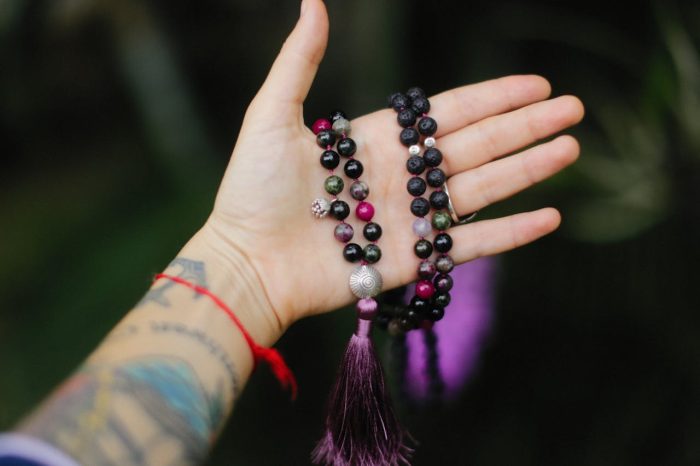
There’s a moment, twice a year, when the light seems to hold still.
The earth keeps turning, of course—it never actually pauses. But at the solstice, the sun reaches the far edge of its arc and lingers there before it turns back. Solstice literally means “sun stands still.” For one breath, on a planetary scale, something stops.
I think about that moment more than is probably reasonable. I trained as a biochemist, and somewhere before and alongside that I became a competitive athlete and photographer and, later, a yoga therapist. Those three or four lives don’t always agree with each other. But they agree on this: the body is built to keep time. We are rhythmic creatures who spend most of our days pretending to be machines.
In the lab, you learn that almost nothing in a living system runs on a flat line. Hormones pulse. Cells divide on a clock. Your core temperature, your alertness, your hunger, your mood—all of it rises and falls on a roughly 24-hour wave, and the master signal that keeps that wave honest is light. We are, at the molecular level, tuned to the turning of the day and the turning of the year.
Then we built a world that flattens all of it. Same indoor light at 7 a.m. and 11 p.m. Same screens, same hours, seasons reduced to a thermostat setting. And we wonder why we feel vaguely off—tired and wired, busy and unmoored, never quite here. We didn’t lose our rhythm. We just stopped listening to it.
The solstice is the one day the rhythm gets loud enough that you can’t ignore it.
We’ve known this for a long time. More than 5,000 years ago, people hauled stones weighing as much as small buildings across the English countryside and set them in a circle so precise that the solstice sun still rises and sets exactly where they aimed it. Stonehenge wasn’t a calendar app. It was a gathering place—somewhere to stand together at the hinge of the year and mark the turning of the light. Cultures all over the world did some version of the same thing. Long before we could measure this moment, we honored it. Together.
A few years ago, I started marking it with what I’ve come to call a practice of 108.
One hundred and eight is a number that keeps surfacing across traditions—in malas, in temples, in the old reckonings of distance between Earth, the sun, and the moon. I’m less interested in the numerology than in what the repetition does. The form is open: it doesn’t have to be 108 sun salutations. It can be 108 breaths. 108 slow squats. 108 steps counted on a walk. One hundred and eight of almost anything, done with attention.
Because here is what repetition does to a restless mind. There’s a part of us—I’ve come to think of it as the recording engine—that is always narrating, planning, replaying, bracing for the next thing. Counting your way slowly through 108 of the same gentle movement gives that engine a single, simple task. And somewhere around the 40th or 50th repetition, it gets bored, and it goes quiet, and what’s left is just you, breathing, present, on time with yourself for the first time all day. You can’t think your way into that state. You have to move your way in.
The other thing I love about the solstice is that it belongs to everyone, equally, at once. In the Northern Hemisphere, June brings the longest day. In the Southern Hemisphere, the same instant is the longest night. The light turns either way. That’s why I’ve stopped calling it summer or winter—it’s simply the June solstice, and the December one, and they’re ours to share no matter which season is happening outside the window.
So that’s where I’ll be on the solstice: pausing at the exact astronomical moment with people scattered across time zones and hemispheres, and then—each of us in our own place, at our own local hour—moving slowly through 108.
I looked for a gathering like this about 15 years ago, when I first felt the pull of it. I couldn’t find one. So I built it. Others have as well.
You don’t need anything to begin. You don’t need to be flexible, or spiritual, or good at sitting still. You need a number, a little attention, and one turning of the light to meet it with. The body already knows the rhythm. The solstice is just a good day to start listening again.
~


Read 1 comment and reply