0
 Share on bsky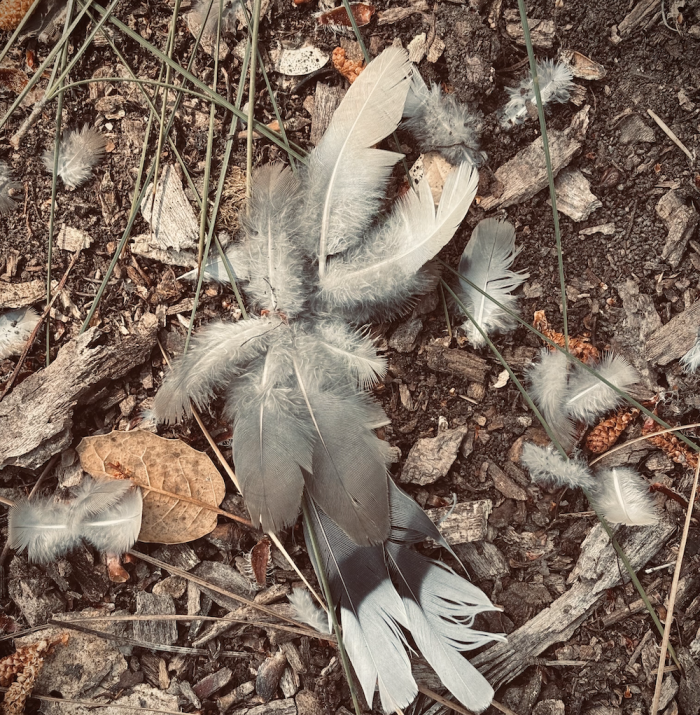
What I learned from Watching a Hawk Devour a Dove outside my Bedroom Window
I want to return to the image I’m trying to forget.
These were the doves who graced our lives. The ones who perched on the wooden fence just beyond our living room. The ones who cooed gently in the morning light and tucked into the olive tree outside our bedroom window.
My wife and I spent hours simply watching them—no phones, no noise, just presence. Their gentle rhythm was our meditation. Sometimes, they’d sit perfectly still, feathers fluffed, wings tilted open to the sun. I often mirrored them without knowing. Legs folded beneath me, palms on thighs, heart steady. Their stillness reminded me that I, too, could be soft and rooted.
It was their presence that taught me how to slow down. How to be quiet in a noisy world. How to feel held without being touched.
Then one morning, it changed.
I was still in bed beside my wife, cocooned under the warmth of the covers, tucked in each other’s arms. We had been talking about nothing in particular, just enjoying the pause between sleep and the day beginning, when it happened.
A loud, jarring thud against the window shattered the stillness. We both sat up, startled. My heart raced. The sound was so sudden, so visceral, it felt like a scream with no voice. Feathers—soft, white, fragile—erupted into the air like snow caught in a gust. At first, I thought a bird had misjudged the glass. I thought maybe it would recover. Maybe I could help.
I stepped to the window and looked down. It wasn’t an accident. A hawk had come. A sharp silhouette of hunger and precision. I don’t know if it chased the dove into the reflection, or if instinct had failed. But there, against the earth, the story was unfolding. A story I didn’t ask to see. A story I couldn’t look away from.
The hawk stood over the dove’s body, its talons sunk deep into feathered flesh. The dove twitched—still alive, or at least not entirely gone. A nervous system clinging to what it knew. Each movement invited another—deeper, firmer—until the body surrendered.
I whispered to myself: This is nature. This is survival. Everyone must eat. But it didn’t feel neutral. It felt intimate. Violent. Sacred.
The hawk moved with a kind of terrible grace. Every motion precise. Every gesture ancient. It pressed its beak into the dove’s neck, as if listening for breath or soul. When the dove stirred again, the hawk adjusted, lifting slightly and then driving down with renewed certainty. Bone cracked. Wings curled inward. Spirit pinned.
Then the unraveling began. The hawk stripped the dove’s chest bare, feather by feather, exposing the soft pink beneath. I couldn’t look away. Not because I wanted to watch, but because something in me needed to. As if my witness could bless the pain. As if staying present was the only way to honor the life that had just been taken.
I didn’t know what to feel. I cycled through nausea, anger, disbelief. I felt powerless. A human watching a god of the sky feed. What part of us watches something die, not from morbid curiosity, but reverence? What primal thread keeps our eyes open even when our stomachs turn? I wanted it to mean something. I wanted the violence to give way to insight. But it didn’t. It stayed sharp.
I tried to tell myself it wasn’t one of our doves. Maybe it was a traveler, a stranger to our window. But deep down, I knew. There were two. Always two. And now there might be only one. I kept listening for the familiar cooing outside the window. It never came.
The next morning, I walked out to the spot. I needed confirmation. Closure. I wasn’t sure what I hoped to find. All that remained was a scatter of gray feathers. No body. No blood. Just the softest parts, left behind. A few feet away, beneath pine needles and damp bark, were more feathers—small, white, almost luminous. A mourning dove.
I sat beside the scene for a long time. Not crying. Not thinking. Just… breathing. The way the doves had taught me. Letting the stillness move through me like wind through branches. And I realized: this is how it happens. The taking. The letting go. The suddenness of it all. When something alive and loved is simply…gone.
We don’t always get a warning. We don’t get time to prepare or say goodbye. Sometimes we just get feathers. And it’s up to us what we do with them. Most people turn away. But I didn’t. I looked at the truth: that beauty isn’t safe, and love doesn’t promise protection. That nature holds both the hand that caresses and the claw that rips. That stillness can be broken in a moment.
This story isn’t wrapped in hope or redemption. I don’t have a bow to tie it up. I still don’t know why I watched. Only that I did. That I stayed, and that’s enough. Because there’s an art to not looking away. A discipline of the heart that chooses presence especially when it hurts. And in that presence, something shifts.
~

author: Jennifer Lynn Coleman
Image: Author's own
Editor: Nicole Cameron

This account does not have permission to comment on Elephant Journal.
Contact support with questions.