|
|
|
|
|
I believe God wants you to know ... ... that all you
have to do is know where you're going. The answers will
come to you of their own accord. Earl Nightingale
said that, and he was right. Set your sights,
and do it now. Do not wait until "conditions
are right" or you have all the money saved or until whatever
else you think needs to be "in place" is finally in
place. Set your sights now. It is the setting
of sights that creates the outcome. Life proceeds out of
your intentions for it. |
|
|
|
|
|
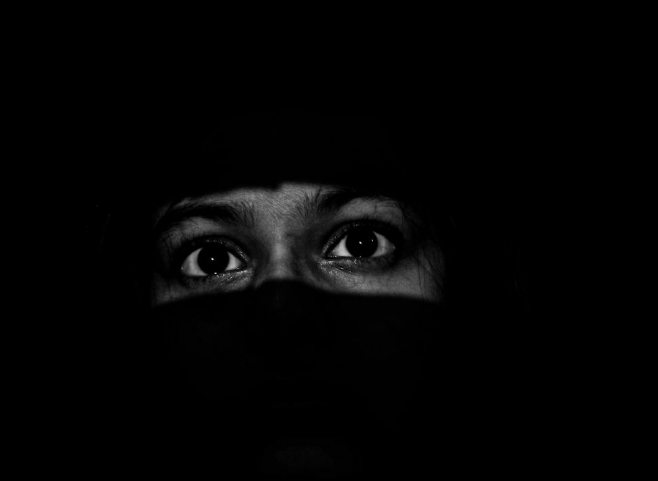
Trauma, especially early trauma, often silences the voice long before it has learned to speak. What gets left behind are feelings of disorientation, longing, and pain that may take years to name. Before I ever had words for what I was going through, I had images. Dreams. Symbols. Metaphors that whispered truths no one around me seemed able to hear.
The Pinhole is one of those early whispers.
I wrote this story over twenty years ago, long before I understood my experiences as trauma, or my patterns of survival as both valid and hard-won. It came from a place inside me that was trying to find light in the dark, trying to believe there was more than just surviving. Like many trauma survivors, I often felt unseen, even by those who claimed to know the way forward. And yet, something within me refused to give up on the possibility of warmth, safety, and connection.
This story is symbolic prose, not autobiography. But it is faithful to the emotional landscape of being lost and slowly, sometimes through the gentleness of others, sometimes through our own stubborn hope, beginning to find the way back. It speaks to that moment when healing begins not through instruction, but through presence. When the light we thought was far away turns out to be within and around us, waiting for us to open our eyes.
There is an undercurrent of spiritual presence in this story, what some might recognize as divine, sacred, or holy. However, I believe the experience it represents transcends belief systems and worldviews. Whether you name that presence as G_d, love, collective care, inner light, or simply the radical beauty of being seen, this story may still be for you.
For those of you who are still wandering, who have glimpsed something beautiful and doubted whether you deserve it, I hope The Pinhole offers comfort. Not a resolution, but a resting place. A reminder that your longing is not weakness, and your grief is not failure. They are the early shape of awakening.
May this story meet you where you are:
A young one wandered, lost in the dark. Occasionally, she bumped into others who also roamed, though none seemed to realize they, too, were lost. A few believed they knew the way and took her along. She trusted them, followed where they led, but always, in time, she found herself alone again, more lost than before, a little more afraid, carrying fresh bruises that whispered of her journey through the darkness.
Now and then she glimpsed a tiny pinhole of light in the distance.
She longed to reach it, to peer through it, but each time, the vast chasm of darkness, her wounds, and her fears made her lose sight of the light. Sometimes, she stopped when she found others who were hurt, staying to help them. But the more she gave, the more her own wounds deepened, and the pinhole of light seemed even farther away.
Over time, she saw the pinhole less and less.
She began to doubt the light had ever been real.
Perhaps she had been abandoned in the darkness as punishment. The thought unsettled her, so she tried to push it away. Instead, she would sit and imagine what wondrous things might lie beyond the dark. Sometimes, this brought her hope…but the hope would fade, swallowed by the shadows. More often, she simply felt trapped, believing she belonged to the darkness, that she would never know more of the light than a fleeting, unreachable memory.
One day, in desperation, she moved through the darkness as fast as she could, calling out to anyone who might know of the light.
Someone heard her, but they knew nothing of the pinhole. Wanting to help, they called to another, who called to another, and soon she found herself passed through the darkness along a corridor.
Then, she met someone different. This one did not claim to know the way. Rather than tell her she was lost and needed to follow someone who “knows,” this one listened to her share her journey and the hope of peering through the pinhole.
And then, something unexpected happened. This one held her tightly.
She wept in the embrace. But this was different from the grasp of the darkness, cold, unwelcome, suffocating. This embrace was warm. Inviting. Safe. For the first time, she knew she was held. She knew she was loved.
And then, her eyes opened.
She gasped.
It had not been a distant pinhole of light she had glimpsed all this time. It had been the light around her, pressing gently against her closed eyelids, waiting for her to see.
Shame surged through her. She cried out, “Why didn’t I just open my eyes? If I had, I wouldn’t have all these wounds. This is all my fault!”
The one who held her squeezed her hand. “It is not your fault. No one ever held you securely enough for you to know. No one told you. All you knew were others with their eyes closed too.”
A realization bloomed within her. This one before her was not just here, this One was everywhere. The pinhole had not only been the light trying to reach her from beyond the darkness. It had been her light, too, trying to illuminate the dark for them all.
And then, she heard the One speak.
“You will still hurt, but you will also find true rest. Rest, my little one. Rest in the light and do not fear the dark. We are One and never alone.”
~
It’s as if autism is something to be eradicated, like a disease, instead of what it really is—a different way of being in the world.
If we “cured” autism, what exactly would that mean? Would everyone suddenly make eye contact more easily? Would small talk come naturally to all of us?
Maybe. But at what cost?
Because when you take away autism, you don’t just take away the challenges. You also take away the creativity, the deep wells of sensitivity, the ability to see patterns and connections others miss.
You lose the children who teach themselves whole new worlds through their special interests, the artists who create with a unique lens, the inventors who think sideways instead of straight.
Autism is not separate from who we are. It is who we are. It’s part of what makes me, me. It’s part of what makes my children exactly who they are.
Without it, we would not be the same people—and I wouldn’t want to imagine a world without their spark, their depth, their brilliance.
I’ll be honest: there have been times when life has felt unbearably difficult, that I’ve wished autism didn’t exist.
But those moments haven’t come from autism itself—they’ve come from trying to exist within systems and institutions that refuse to bend. Systems that want you to fit their mold and, if you don’t, they try to “fix” you. Back into school. Back into the workplace. Back into conformity. It’s exhausting.
And yet, without autism, I wouldn’t think as deeply, care as intensely, or create as instinctively. Without autism, my child wouldn’t love animals with such fierce devotion—forming strong connections, rescuing, nurturing. Without autism, my child wouldn’t be the writer and creator he is today, building whole worlds from his imagination. And without autism, my child wouldn’t have the passions that keep her talking for hours—about music artists, hobbies, people, and places.
These “obsessions,” as some might dismiss them, are what make her a good friend, what allow her to form bonds, what light her up with joy.
We shouldn’t be asking how to take autism away. We should be asking how to make every environment safe, welcoming, and accessible for autistic people.
Of course, I don’t say this with rose-tinted glasses. Autism can bring struggles, for me and for my family. But those struggles are magnified not because autism is inherently “wrong,” but because society is built on a narrow idea of normal. We live in a world that values productivity over presence, conformity over authenticity.
It’s a world that thrives on everyone fitting the same mold—school, job, routine—without space for those of us who move differently, think differently, feel differently.
I can only speak from my own experience, and I know every autistic person’s life is different. Some face challenges that I don’t, some carry joys that I may never know. But I do know this: the answer is not to prevent or cure autism. The answer is to create a society where difference is not just tolerated, but celebrated.
So perhaps the question isn’t “How do we prevent autism?” but “How do we make space for autistic people to thrive?”
What if we shifted our focus from eradicating difference to embracing it?
What if, instead of pouring energy into a so-called “cure,” we poured it into making classrooms calmer, workplaces kinder, communities more flexible and compassionate?
When we widen the world to hold all kinds of minds, everyone benefits. And maybe then the conversation can move from “How do we stop autism?” to “How do we value and nurture autistic lives?”
~
This account does not have permission to comment on Elephant Journal.
Contact support with questions.


 Share on bsky
This account does not have permission to comment on Elephant Journal.
Contact support with questions.