0
 Share on bsky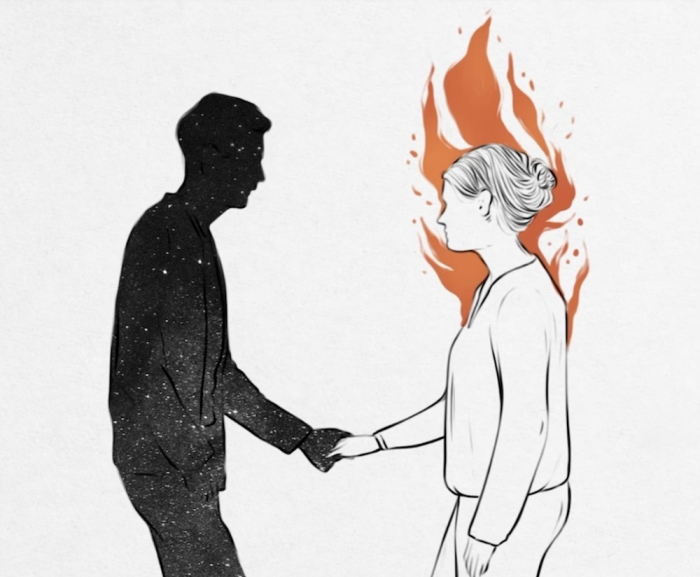
* This article is part of a series. You can read part one, Whispers from the Other Side: Dreams, Signs & the Unexpected Gifts of Grief, here.
~
Not every marriage ends with a clean break.
Sometimes it frays in silence, over years, until you can’t tell if what you’re holding is love or just obligation. Mine was both beautiful and broken—family photos full of laughter alongside lonely nights of numbness.
This is what happens when keeping the peace means abandoning yourself.
~
Before he died, we had already quietly unraveled. For years.
And while Steve had his voids, I own that I had mine too. I played a part in the slow death of our marriage.
I didn’t know it at the time, but I had been living numb. Disconnected not just from him, but from myself. That’s the thing about dysfunction: it doesn’t scream. It simmers. You adapt and you explain things away. You become so skilled at keeping the peace that you forget what your own rage and disappointment sound like.
Honestly? When he died, part of me wasn’t surprised. Not because I didn’t care, but because I had already been living for months with a sense of dread. He had started leaving cryptic messages that left me wondering if one day he might take me out instead. I was looking over my shoulder a lot, waiting for the other shoe to drop.
That kind of fear dulls you. It numbs you. It convinces you the worst is always just around the corner. So when the worst finally happened, I didn’t feel shock the way others did. I felt a terrible confirmation of what my body already suspected.
In some dark way, his death felt like a twisted punctuation mark on a relationship that had already ended quietly, long before the funeral. We stayed married on paper, but in reality, we had been miles apart for a long time.
I used to think grief would come like a tsunami—loud, overwhelming, knocking the breath out of you. Mine arrived like fog. Slow. Creeping. It dulled everything.
And I realized: I had gone numb years before. I just didn’t know how to name it.
The truth is, you don’t survive a fractured 14-year marriage without developing an impressive skill set in emotional dissociation. It became my superpower. But it was also my excuse. I told myself silence was strength, when really it was avoidance.
I was angry, but I didn’t know how to be angry—not in a way that felt safe, nor in a way that didn’t lead to more damage. I wasn’t raised to feel anger, let alone express it. In my childhood home, anger was either dangerous or disrespectful. So I swallowed it. Smiled through it. And told myself, “This is what commitment looks like.”
The problem is—I kept choosing peace over truth. And that choice cost us both.
Steve had his voids. I had mine. And we raged at each other for not filling them. That was the real sickness in our marriage. We both played our roles in that dynamic. We both hid behind performance and obligation—the perfect family photo, the team dinners, the holiday cards. And here’s the thing: it wasn’t all lies. Some of those dinners were filled with laughter. Some of those photos did capture love.
That’s what made it so confusing—how the good and the broken lived side by side, until I couldn’t tell which one was the real marriage anymore.
Most people never saw the unraveling behind closed doors. Well…a few did, the ones who mattered. But for most, it was a shock. How could they not be? We looked so good on paper.
I had stayed too long. Not because I loved him so much, but because I was afraid. Afraid to break up the family. Afraid of being alone. Afraid of being wrong. And underneath all of that fear, I still held hope—hope that with time, therapy, or sheer breathing room, maybe we could find a way back. At the very least, I hoped we could co-parent without flinching at each other’s presence.
But when he died, all the illusions died with him.
And grief didn’t enter politely. It kicked the door down. It didn’t care that we’d played our roles so convincingly that everyone else was blindsided. It didn’t care that I had loved him, even while drowning in disappointment.
Grief doesn’t care about your bullsh*t, your excuses, or your timelines.
It forced me to face not just what he did, but what I didn’t do. I had to look at the ways I abandoned myself long before I lost him.
Grief tears down every wall you’ve built, breaks through the numbness, and drags the unspoken, the unresolved, and the ugly into the light.
Grief is a humbling little b*tch.
~


This account does not have permission to comment on Elephant Journal.
Contact support with questions.