0
 Share on bsky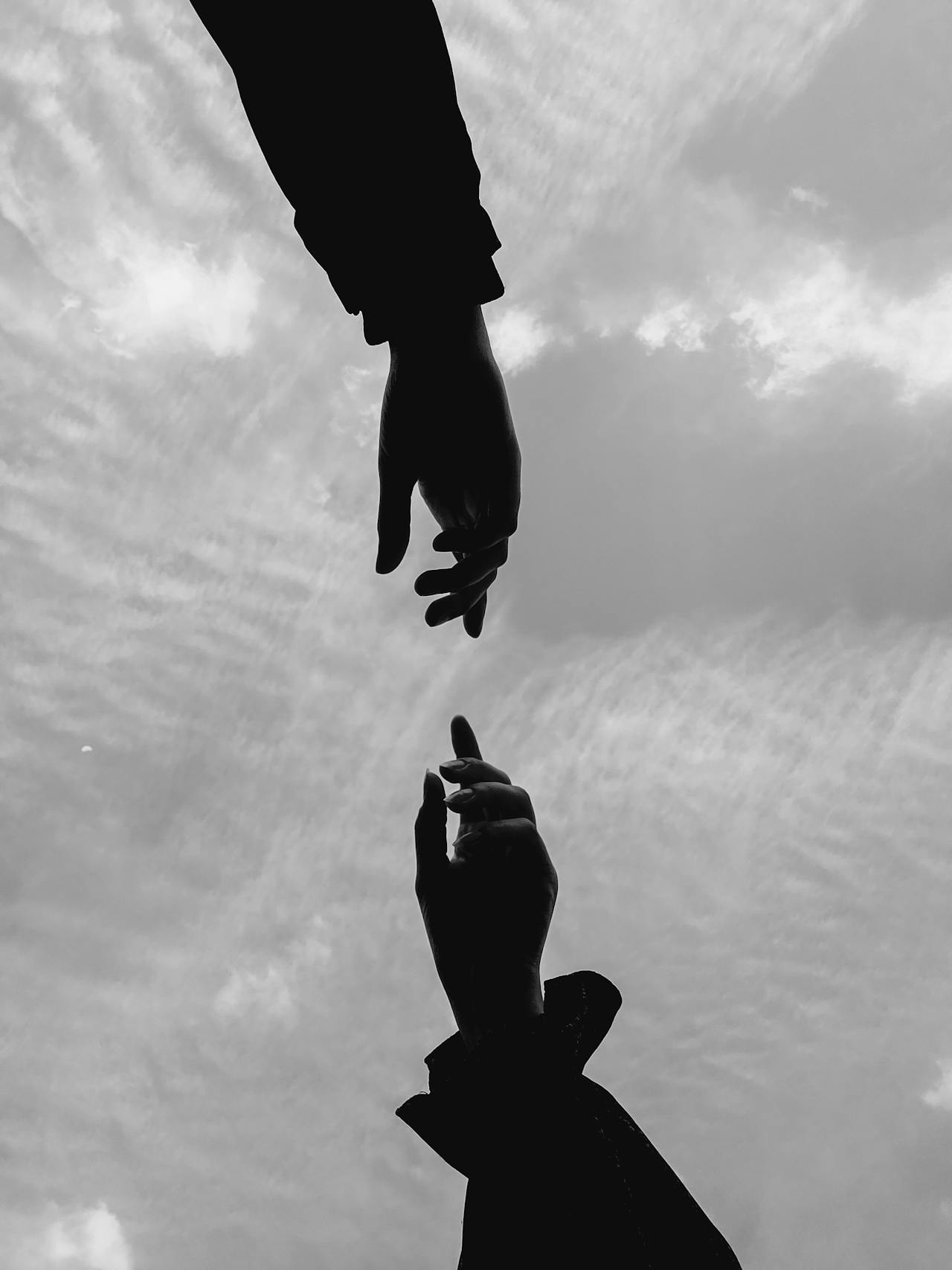
*Editor’s Note: Elephant Journal articles represent the personal views of the authors, and can not possibly reflect Elephant Journal as a whole. Disagree with an Op-Ed or opinion? We’re happy to share your experience here.
~
Author’s Note: to receive the depth of this analysis, I invite you to rise beyond the veils of conditioning, both known and hidden, that may still shape your perception in this moment.
~
An Invitation to Look Deeper
In this analysis, I attempt to make visible the underlying psychological dynamics of human behaviours expressed through the legitimacy of political actions. This is my understanding, and is shared to touch you and hopefully to also bring light to your inner seeing.
We live in a world where politics and emotion no longer sit apart. Just like in a personal relationship between partners, parents and children, friends or co-workers, when emotional needs are unmet, conflicts escalate.
Politics is simply a stage for our collective unmet emotions to play themselves out. When we don’t feel seen, heard, valued, or understood as individuals or as groups, we begin to act from our wounded parts.
The Emotional Dimension of War
What we are witnessing is not just a geopolitical war. It is deeply emotional. It is a mirror of how we relate to pain, identity, and power.
In times where emotional awareness in human beings has heightened beyond anything we’ve seen before, we can now see this playing out in different areas of our human experience: parenting, education, health, work conditions, and now, also, in our global politics. We are seeing the breakout of an emotional war.
Even though it seems deeply tragic on the surface, powerful undercurrents are moving. Everything hidden is coming into light through deep darkness. If you reflect on any major event in your personal life, you will see this pattern: transformation is always born out of a breakdown.
Personal growth happens when facing moments of darkness, rupture, or deep self-inquiry. And this is not different for our nations. This is no longer just a political power game between a few countries. This is the collective breakdown before the light.
When two people are in conflict, and in this case, when two nations are, what is truly being revealed is a deeper dynamic inside the collective psyche of the people who co-create that nation. It’s the echo of our personal stories playing out on a national and international stage. And the more we deny the emotional roots of our collective pain, the more explosive our external realities become.
A Personal Story as Mirror
As I sit here writing this in a co-working space, another person across the desk is speaking loudly on his phone. It’s just the two of us here. In my flow of writing, the first reaction I have is to feel a bit annoyed by the noise, thinking to myself: this is a shared space, can you please respect the silence?
But then another part of me arises and I hear an inner voice whispering: maybe he needs to speak on the phone while looking at his laptop. Maybe he isn’t even aware of the impact it has on me.
I have two choices: I could get upset, or I could shift my inner-standing. Eventually, I decided to put on my headphones, playing calming music so I would not hear the outside noise, and return to my writing.
This lived experience is a perfect example to shed light on something crucial: putting my headphones on as a solution does not mean I deny my needs. It means I find a creative way to meet them without escalating the situation or creating a conflict. Without risking making him wrong, and without needing to dominate our shared space.
This shift in my perspective changes how I feel about the situation and what I decide to do about it. The inner shift reflects itself in my behavior outward, in my choices, and in my decisions.
I manage to return to my center quickly, staying connected to my original intention: to come here to write, to get my work done, to reach my personal goal for the day, and to go home feeling content and happy in the afternoon with my family.
This solution came to mind when I stopped seeing the other as the cause of my annoyance, as I simultaneously opened up a space for a different truth, different from the one playing out in my head, and connected to the story of who I think I am and what my rights are.
Please bear in mind that while I do not intend to equate this example with the gravity of harm occurring in war, I use it gently to illustrate the underlying human principles at play. The distinction is vast, yet the emotional mechanisms—perception, response, and the desire for mutual space—echo through both situations, pointing to how the same principles are essential for creating a space for coexistence.
Historic Wounds and Emotional Inheritance
Let’s bring in a larger context. To understand the current conflict in the Middle East, we need to look at each people’s history separately, how the individuals might reason, and why. This is not to justify any actions or violence, but to show what ignites a person to view the world in a certain way, and thus act upon that inner-standing.
The Jewish history
The Jewish people, for decades, have lived with a collective wound—the trauma of displacement, genocide, and feeling unwanted. After the horrors of World War II, they were forced to move, with the promise of a homeland, because they were not welcomed in certain parts of the world. Due to the violence they have endured, for many, Jerusalem became not just a place, but a symbol of their right to exist.
To live with the inner belief system that you are unwanted, without a rightful place to land and build safety, does something deep to the human psyche. It builds a hunger for legitimacy. For recognition. For sovereignty.
Imagine yourself growing up with the images of Auschwitz. Knowing that your grandparents and relatives were killed in gas chambers. How would that make you feel? What effect would that have on your psychology and your sense of existence as a human being?
When a wound remains unseen, unheard, or unhealed, it often transforms into a driving force embedded within a survival mechanism. These mechanisms function to protect us by shaping a constructed identity—one that emerges from the narrative we create about ourselves in order to withstand perceived threats. Over time, this narrative becomes the foundation from which we define ourselves in relation to the world, influencing how we perceive reality, others, and our place within it.
For example, a child who grows up being told they are unwanted or unsafe may grow into an adult who constantly seeks validation, approval, or dominance—not out of arrogance, but from an internalized belief that their existence needs to be justified. This perception shapes how we act, relate, and respond to others, especially in times of conflict or fear.
When you cannot channel this pain toward those you perceive as more “powerful,” in the desire to save yourself (which is a natural human instinct), you will project it onto those you believe you can control. In this case, the Palestinians.
In this dynamic, the Palestinians, by their geographic proximity and the collective perception, have become the containers of unprocessed inner suffering, projected outward through patterns of hatred and oppression.
The Palestinians
For over seven decades, the Palestinians have lived with the consequences of statelessness, forced displacement, and occupation. Their homes, lands, and identities have been contested and restricted. They have lived under military occupation, behind walls and checkpoints, with limited access to resources, mobility, and basic rights. Their pain has become invisible to the dominant narratives of the world. Their suffering was dismissed as collateral damage in a complex war. Their very identity as Arabs and Muslims is often portrayed through the lens of extremism or violence, rather than humanity, resilience, or rightful grief.
Let’s be brutally honest about how the Muslim world has been portrayed in modern history, especially in Western media. The image of Arabs, and Middle Eastern culture and religion, has often been distorted, flattened, and dehumanized. This has led to a subconscious bias, even in well-meaning individuals, where Arab lives are seen as less valuable, less civilized, or less capable of peace.
The result is a population that feels trapped by borders, by perceptions, by generational trauma. When people are continuously silenced, their resistance becomes louder. Their pain finds expression in the only ways left available.
To recognize this is not to justify violence. It is to understand the soil in which it grows. Because until we see the full story, we cannot even begin to approach healing.
What about Iranians?
Iranians carry a different collective wound. Once an empire, now mocked, shamed, and often delegitimized on the global stage. Many Iranians abroad are among the most successful, educated, and disciplined groups in the diaspora, just as the Jews. Yet inside, many still carry a deep ache of not being seen correctly or being respected. Of feeling like their identity is ridiculed because of how they are represented politically through the clothing and representations of their leaders, whom they many times do not identify with.
This shame is complex. It’s a humiliation that runs through the Persian consciousness, especially in contrast to its former glory. We were once an empire, and look where we are now. This leaves a deep wound of broken pride, of not having a valid voice, of being unheard and unworthy in the eyes of the world.
This frustration often lashes outwards through reactive political posturing. In international arenas, I’ve seen how Iranian representatives are often met with silent mockery. Laughed at. Dismissed before they even speak. The assumption is made that nothing of value will come from their mouths.
This is a self-breaking sensation to carry. It represses truth. It disables dignity. And it creates a deep hunger to be taken seriously, to be respected, to be feared—even if that fear comes through threats rather than diplomacy. What we see as political aggression is often emotional desperation. We must see these emotions, not to excuse, but to illuminate. Because what is not illuminated will always find a way to explode.
And in the background of all this pain, there is a longer history, one that implicates the global systems we rarely wish to acknowledge. Colonization. White dominance. The erasure of indigenous voices. The silencing of the non-Western mind.
From the moment Columbus arrived in Latin America, stepping over the rights of native peoples, to the forced exile and placement of Jewish communities in new territories, to the long-standing global patronizing of Middle Eastern countries, a pattern emerges. One where white Western power gets to decide who belongs where. Who has value? Whose voice is worthy?
We must confront what is happening, not to assign blame or provoke shame, but to have an honest chance to initiate healing. When we deny our role and responsibility in the reality unfolding before us, we simultaneously deny the essential process of our personal and collective evolution.
As a global society, we need to acknowledge that the stage for this conflict has not emerged in isolation. It has been constructed over centuries through systems of domination, separation, and dehumanization. Without recognizing this shared historical context, we cannot meaningfully transform the narrative currently playing out for all of us.
Everything is coming to light now because everything is ultimately guiding us toward personal and collective growth.
The Role of the Bystander: Silence, Shame, and Systems
What about those of us who are watching, feeling, perhaps even reacting, but not directly involved?
This is where the bystander enters the stage. The silent witness. The one who sees the injustice but doesn’t know how to respond. The one who posts online but avoids deeper action. The one who sighs at the news and changes the channel.
Silence, when prolonged, becomes complicity. And the global community has been largely silent in the “conflicts of the Middle East,” not because we don’t care, but because we don’t know how to carry the discomfort of acknowledging our part in it. It touches our core of self-responsibility and our shadows, which we do not wish to acknowledge.
We say it’s not our war, not our land, not our children. But it is. When we look away from another’s pain, we are turning our backs on the part of ourselves that has been abandoned, silenced, or unseen.
We’ve normalized suffering in certain parts of the world: Arabs. Iranians. Palestinians. Jews. These groups have been positioned, consciously or not, as “other,” as “lesser,” as problems too complex to solve.
And that perception, rooted in global systems of colonialism, racism, and white supremacy, keeps the pain going. Because the world has not yet been willing to take full responsibility for the chain of decisions, fears, and dominations that created the very wounds now exploding before our eyes.
Conflict as Mirror of the Self
Every large-scale conflict is a mirror of the smaller wars within ourselves.
When we see nations fighting, it is often because individuals within those nations are unresolved, disconnected from their own wholeness, their own worth, their own inner sovereignty. We’ve externalized our wounds into national identities, and now we project them onto others, hoping that by attacking the outside, we might silence the discomfort inside.
But you cannot bomb your way to peace. You cannot shame your way to justice. And you cannot dominate your way into healing.
As a therapist, I’ve seen this in families, couples, and even in the psyche of a single child. Hurt always lashes out when it is unseen. Power always becomes aggressive when it grows from fear. And the only way through is to stop, feel, and take radical responsibility for your part in the dynamic.
This is just as true for nations as it is for individuals. The personal and the collective, the “small” and the “big,” are ultimately reflections of the same.
Returning to Ourselves: From Labels to Essence
Iranian. Israeli. Palestinian. Arab. Muslim. Jew. Christian. Western. Eastern.
These are inherited identities, stories shaped by history, molded by trauma, and reinforced through fear and separation. While they may carry cultural significance, they often become internal limitations, forming boundaries between us and others. But beneath every label lies something deeper: our shared human essence.
The essence of a human being carries no flag. It seeks neither power nor dominance. It simply longs to love and be loved. To feel safe. To be seen. As hard as it may be to accept, our essence requires nothing external to complete it. It is whole in itself.
When I release the identity imposed on me, whether as “Iranian” or even my name, “Pegáh,” I am not rejecting my roots. I am stepping into something much greater. I have become the woman who was born in Iran, raised in Sweden, and now living in Spain. I have become someone who has had the privilege to live and work across diverse cultures, to listen deeply to many stories, and to witness how the same fears, longings, and hopes beat within every human heart.
In doing so, I become more than a limited identity. I have become connected to every culture I have encountered, to every person I have sat with, worked with, and been able to grown through. I see myself in each of them, and through them, I remember who I am.
This realisation reveals something essential: if I have so much in common with the thousands of people who have crossed my path, then I cannot be separate from them. I am of them, and they are of me. This is the space where healing is. It does not need to be searched for or created. It simply needs to be seen, embraced, and remembered. Healing is the return to something larger than the labels we carry. It is the return to essence, the truth of who we are, beneath all mind-created conditioning.
Sacred Grief and the Longing to Belong
If grief could speak, it would not choose a language. It would not wear a uniform or claim one border over another. Grief is universal. And sacred. It arises when we have loved something deeply and lost it.
Every child lost in war, every parent left behind, every life reduced to rubble—that is grief. That is sacred. That is not Israeli or Iranian, not Muslim or Jewish. It is human. And we must begin to treat it as such.
When grief is honored, it softens us. It opens the heart. But when it is denied, weaponized, or politicized, it becomes rage, blame, and retaliation. It becomes the breeding ground for generational cycles of pain.
I have sat with people who carry inherited grief. Jewish elders who still tremble when remembering their escape. Palestinian youth who have never seen the ocean, though they live just miles from it. Iranian parents who fled for the safety of their children. The stories differ. The ache does not.
At the root of it all is the longing to belong. To matter. To be held by something greater than trauma, more permanent than fear. This longing lives in every person, every culture, every soul.
Until we allow space for each other’s sacred grief, we will continue to repeat the same patterns, believing the illusion that one people’s pain is more valid than another’s. We will continue feeding our separation consciousness.
The New Dawn
There is a new dawn approaching.
It is not political. It is personal. It is spiritual.
In the new dawn, we do not erase our differences—we honor them as sacred textures of one human fabric. We do not seek to defeat the other—we seek to understand, to meet, and to rise together.
To get there, we must first look honestly at what we’ve denied: our pain, our inner power, and our self-responsibility. We must be willing to feel what generations have numbed. We must be willing to remember who we truly are beneath our inherited fears. Because no child should grow up learning to hate another child because of a flag or a fear passed down.
This new dawn is not just a shift in policy—it is a shift in perception. It is a quiet revolution of the heart. It begins not in the halls of power, but in the intimacy of our relationships, the courage of our self-inquiry, and the choices we make when no one is watching.
It is a time of remembering. Of seeing through the illusion of separation. Of honoring the pain without becoming it. Of holding hands across histories that once divided us.
I dream of a world where no child grows up in war, because I know the cost. I have carried the weight of such early loss. I have lived the consequences every day of my life.
But after years of healing, I understand that my life happened to serve the common good. And there is no greater desire in me than for that purpose to be fulfilled. When I help you reach that place of peace within yourself, I know I have also found mine. Because your gain is mine. And mine is yours.
We are not here to conquer one another. We are here to co-create a new story.
One rooted in unity. One rooted in truth. One rooted in love.
~


This account does not have permission to comment on Elephant Journal.
Contact support with questions.