0
 Share on bsky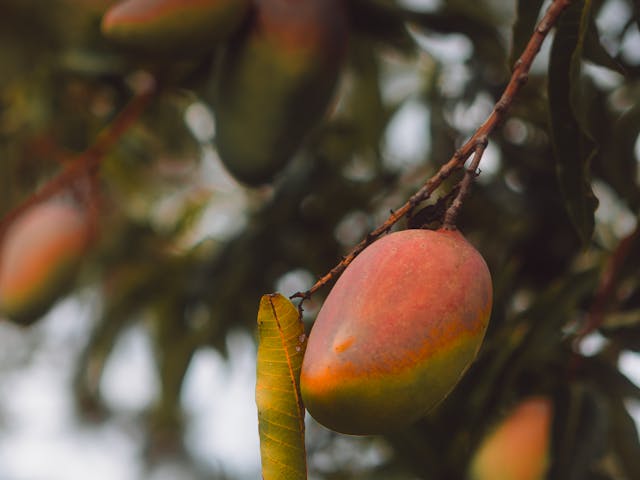
I come from a long line of brave, independent, strong women.
I was lucky enough to know possibly the strongest of the line: my great-grandmother Lea.
Born in 1898, she lived through World War I, The Great Depression, then World War II. She survived smallpox but lost a baby to it. She also contracted and survived tetanus. She lived through several revolutions, natural disasters, fires, hard times many times over—not to mention, four husbands.
She was generally grumpy and didn’t talk much, but somehow we understood each other and got along .
She had a plethora of witty, albeit caustic sayings and had a knack for knowing exactly when to use them. For example, when talking about how family and friends disappear when you’re going through a rough patch, she’d say, “To others, our misfortunes are just rumors.”
When a man took care of some heavy work she’d say, “At the end of the day, they are necessary to have around.”
When describing something that wasn’t in great shape but still got the job done, she’d say, “A broken, dull knife will always be better than using your fingernails.”
But my two favorite sayings were: “There are always bones in the wolfs’ den,” and “On the days when there is nothing to eat, we will eat the best.”
They didn’t make any sense to me, but as it turns out, my great-grandma not only had a multitude of sayings, but she also had a million stories to tell. She told me about a particular day when the cupboards were bare.
“With four kids to feed, and no hope in sight, you have to have faith and get creative.”
While thinking about how she would manage feeding the family, which was no small feat for a single mother of four in the 1940s, a mango fell from the tree—a towering tree that took up the whole front yard. To be clear, a mango falling isn’t a really big deal, it happens all the time, but in this particular case, a light went on.
She looked up and saw a beautiful bunch of the ripe, delicious fruit. At first she thought, well okay, we can cut some up and they can eat them until their stomachs are full. But then she thought about how hot the day was, and how nice it would be to have ice cream for dinner for a wild change.
There were exactly two cans of evaporated milk, some homemade vanilla extract, a pound of sugar and—ding, ding, ding—a manual ice cream maker. Every respectable home had an ice cream maker, and on that day it would come very much in handy. All she needed now was some ice and salt.
In her pocket book she had just enough to buy ice. With the equivalent of 50 cents, they sold it in blocks just down the street; further down at the grocery store, she could buy a pound of coarse sea salt that she could sign for the 10 cents it cost.
All that was left to do was get five or six mangos from the tree. That would be done by the housekeepers’ teenage son. With a pile of rocks, a slingshot, and a precise aim, like a sharpshooter, he got them down. Sometimes two would fall, sometimes he’d miss, but in the end, about 10 mangos were had.
Next was to make a nectar with the mango pulp. This was done by peeling and cutting off as much of the fruit as possible, from the skin and the seed.
After doing so, my great-grandmother would press the cut fruit through a fine mesh sieve several times to extract as much juice as possible from the fibrous flesh. She’d then add sugar, enough to get it syrupy, then a spoonful of homemade vanilla extract, and finally the two cans of thick, creamy evaporated milk.
Now the mix was ready for the ice cream maker.
If you’ve lived long enough, you may remember them. They looked like buckets made of wooden slats, and had a smaller tin bucket that fit inside with a mechanism on top that held everything together and a handle to churn your ice cream. After blending all the ingredients , most certainly by hand, you’d fill the sides of the bucket with chunks of ice and a good handful of the sea salt poured on it. Then all that was needed was to find someone to do the churning.
In most cases, it would take several people, usually the older kids, and the housekeepers son, alternating turning the handle over and over. Before the ice cream was ready, the bucket had to be refilled with ice and salt maybe three times, and by then, everyone’s arm felt like it was about to break off—but they just knew it would be so worth it. The laughter and anticipation made an exhausting task funny and bearable.
When the ice cream was finally ready, no one could contain their excitement. The pain and time it took to make it was suddenly forgotten at the sight of gorgeous, creamy, saffron-colored ice cream served in fine china with her best silverware, because, why not?
Another saying she had was, “When things are bad, they are totally bad—so live it up.” Everyone got a bowl and everyone dug in immediately. Mango has a strong, pungent, distinct taste and is delightfully sweet but invariably there would be a twinge of saltiness that came from the droplets of the salted, melting ice that would land on it from the vigorous churning, and that made it all the better.
I wasn’t there then, but growing up in the Caribbean it was common to have these “sorbetières” as we say in French, and making ice cream with the fruit from the yard—in my case, acerola cherries, guava, and of course, mango—was always something to look forward to on a hot Saturday afternoon.
With time, electric ice cream makers took over. Although so much easier, everyone had to admit that the ice cream from an electric maker was never quite as good. There’s something about the deliciousness of it being handmade that goes beyond just taste.
My great-grandmother told me that having ice cream for dinner became a regular thing. It wasn’t always mango though. Sometimes it would be soursop, grenadine, or even orange ice cream. It all depended on what fruit was in season.
Ice cream being the best meal when there was nothing else went much deeper than all the effort it took to make. To me, it was grace under fire.
Sometimes not having anything meant having the turkey or rooster that was being fattened for Christmas in July. Or opening the boxed ham that was meant for a special occasion. And there were always the tins of cookies and candies from Germany and France that came with a great-aunt from her travels to Europe on a steamship. All in all, the main thing I took away is that my great-grandmother came through, time and time again. Just as her mother, grandmother, great-grandmother and so on had always done.
Lea lived to be 92. Although I was just 20 when she passed, she had instilled in me the notion that you have to have faith that things will always work out, no matter what.
Having lived in Haiti now for the past 30 years, and having gone through countless revolutions, natural disasters, being married and divorced, being a single mom to two incredible kids, and now living through a horrific civil war, I hold on to this notion tighter than ever.
It has never let me down.
So for good measure, I never hesitate to use fine china for no reason, or to have homemade ice cream for dinner, with a sprinkle of sea salt just because. And so should you.
~


This account does not have permission to comment on Elephant Journal.
Contact support with questions.