4
 Share on bsky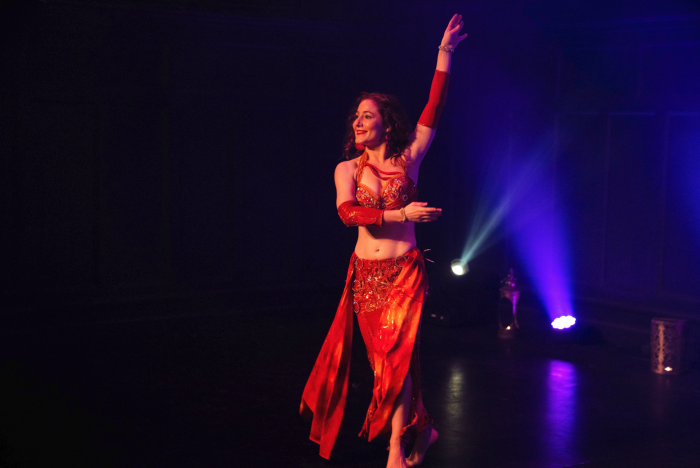
Like many little girls, I started ballet when I was five years old.
I have an adorable photo of myself from that time in a pink leotard and matching skirt and there’s no mistaking the utter elation on my face.
Unfortunately, that playful joy shifted as I became a young woman. At least for me, ballet amplified my type-A personality and the buttoned-up “good girl” persona that I embodied as a teenager (as much as I longed for the opposite deep down).
I was highly self-critical and perfectionistic, which drove a lot of my thinking and actions.
Years later, I would read Clarissa Pinkola Estes’ book Women Who Run with Wolves and realise how I carried a generational pattern of women keeping ourselves tame and in our box through these qualities. Ballet, sadly, felt like an expression of that pattern.
I can’t emphasise enough how this is not a comment about ballet as a dance form. There are many incredible dancers who find total expression and freedom through it and I would never discount that. Frankly, I am mesmerised by ballet dancers and often go to watch professional stage productions.
For me, I come from an ancestral and cultural background that is quite conservative. So it’s been my journey as a woman to unwind that and release shame around embracing my femininity, sensuality, sexuality, and wildness.
Unlike most little girls who give up ballet after a few years, I was still committed at the age of 17, where I had reached an advanced stage of ballet doing pointe work. A fateful mistake one day led to me tearing both of my hamstrings—a serious injury that took me out of action. Thankfully, I saw a fantastic injury specialist, but by the time I was healed a year later, my love and drive for ballet had moved on.
Still, I mourned the loss of dance and it was a year later at college where belly dance entered my life, hand-delivered by the Universe.
One afternoon, I was filling up my car at a petrol station and spotted a large banner across the road that read “Middle Eastern Dance Classes.” I took down the details but did nothing about it for months, until a bad personal situation left me feeling like I had no control over my reality.
In a moment of pure intuition, I dug into my phone and booked my first class the next day. I knew by the end of the hour that something was special and essential about this dance form.
My teacher was the embodiment of feminine wildness, living to the beat of her own drum. Twice a week, I would walk up the stairs to her studio above a pizza restaurant, the heavy smell of incense hitting my nostrils. I’d find her splayed out on the floor in a sports bra and hot pants, eating peanut butter out of the jar.
If class happened to correlate with her menstrual cycle, she would cry out as we entered the studio, “I’m on my moon cycle, so I’m going to be crazy and loopy today, okay?!”
As a dancer and teacher, she had such deep knowledge of her body and the traditions of belly dance. It felt like entering into a new world. Despite stereotypes and the sexualisation often associated with it, belly dance is an extremely rich dance tradition from different regions of the Middle East and the Mediterranean now danced all over the world.
It’s not even called “belly dance” in many cases as it is connected to countless folk traditions. It can be anything from fun, playful, and sensual, to serious, spiritual, and even masculine! It’s practiced by dancers of all ages and body shapes, often by women who have felt disconnected from their bodies and femininity in some way.
Now you would be right to imagine that transitioning from ballet to belly dancing was difficult. While ballet gave me a strong basis in dance, the parts of the body that were kept firm and linear in ballet were now relaxed, shaken, in belly dancing.
I looked and felt extremely awkward for a long time, but it somehow didn’t matter that I wasn’t perfect at it. It only mattered that I was progressing and learning this incredible feminine art form day by day.
Ten years after starting belly dancing, I am now an advanced level dancer able to perform solo on a stage. I’m still the highly dedicated woman I was when I did ballet for all those years, wanting to master belly dance as far as I can go. But it feels different. It feels like all those years of growth—as a person and dancer—have finally given me the gift of being “good” at belly dance.
Looking back, belly dance came to me at the perfect time, as I was figuring out who I was as a young woman who was not fully settled in her skin.
Even to this day when I’m feeling dysregulated and self-critical, there is nothing more healing than putting on some music and dancing to it. I feel instantly more beautiful, feminine, grounded, magnetic.
When other women find out I do belly dancing now, I get a lot of interesting responses. Mostly, I notice that it evokes a deep wish to explore and express themselves in such a sensual and feminine way. To honour their bodies and wild spirit. There’s a lot of embarrassment and shame buried beneath these wishes, a deep wounding with its roots in many places.
I receive these whispered admissions and longings with huge understanding and compassion, just as I enthusiastically encourage these women to give it a go!
At the end of the day, the point for me is not about “ballet versus belly dance.” I am categorically not calling for some boycott of putting little girls in ballet. (I’ll probably put my own future daughter in ballet one day.)
Recently, I even spoke to a woman who had started adult ballet classes to fulfill a lifelong dream of hers. She had just bought her first pair of ballet shoes and was brimming with Disney-princess joy.
The point is that dance should help us express and explore what it means to be women. It should heal us and remove shame and self-consciousness. It should bring us joy. Of course, this can change over time just as it did for me.
What I do feel, however, is that as long as women are subjected to painful legacies of disconnection and shame around our bodies and femininity, belly dance will remain a deeply powerful dance form for us. Perhaps beyond any other.
Because at its core, dance should help us be free.
~

author: Anthea van den Bergh
Image: World Belly Dance Day Cape Town/Photographer: Jacques Nel
Editor: Lisa Erickson

This account does not have permission to comment on Elephant Journal.
Contact support with questions.