|
|
|
|
|
|
Laughter
is the most inexpensive and most effective wonder drug. Laughter is a universal
medicine. Bertrand Russell
|
I believe God wants you to know ... ... that medical
procedures are nothing to be afraid of when God is on your
side. And that, of
course, is always. So, since God is on your side,
nothing can go wrong. Even if you should die, nothing will have
gone wrong. Death is not the
end of anything. It is simply your
Continuation Day. With regard
to medicine then, and to all medical matters,
follow your heart, listen to your
soul, get good advice, then do what feels
intuitively right. You know
exactly why you received this message today. |
|
|
|
|
|
|

*Editor’s Note: Elephant is not your doctor or hospital. Our lawyers would say “this web site is not designed to, and should not be construed to provide medical advice, professional diagnosis, opinion, or treatment to you or any other individual, and is not intended as a substitute for medical or professional care and treatment. Always consult a health professional before trying out new home therapies or changing your diet.” But we can’t afford lawyers, and you knew all that. ~ Ed
~
This is the story of learning to listen—of discovering that fatigue and pain aren’t failures but a language of survival. And, once we understand that language, how we begin to answer back with care.
There came a time when my body began to speak a language I didn’t understand. It whispered first—a tiredness that no amount of rest could mend, small tremors of protest beneath the skin.
I did what we are taught to do: I silenced it. I worked harder, rationalised more, became fluent in minimising pain.
But bodies, like children and truths, do not disappear when ignored—they simply find new ways to make themselves heard.
Mine began to shout. And in its refusal to be translated, it taught me the most radical thing: that symptoms are not the enemy, but the body’s dialect for unspeakable things.
As a busy, working single mother of twins, I carried on at first. Tiredness seemed fair. It felt slightly strange that my body was growing weaker, not stronger…but life had narrowed to one urgent task—keeping my little girl breathing and my little boy alive.
I had to turn away from the whispers of my own body and trust that it would carry us through. And it did.
My marvellous body—the same one that had carried and birthed twins after a long, difficult labour—threw itself into survival. Exhausted and unwell, it kept us afloat: breastfeeding through sleepless nights on a canal boat, moving house, returning to work.
When my daughter’s lungs began to collapse and the emergency admissions came week after week, I went three days at a time on an hour of sleep.
There were nights in resus rooms and ambulances, my hand wrapped around hers, praying love would keep her tethered to this world.
Days blurred into hospital corridors and work delivered from my phone beside her bed.
I supported grieving families while quietly breaking inside—never daring to pause long enough to hear what my body needed.
And my brilliant body kept going, and going, and going.
Then came COVID-19.
A few weeks before the world went into lockdown, my children and I already had.
After my son had another major seizure, the hospital sent us home with the words stay safe, stay inside—and from that moment, everything changed. No more juggling work, hospitals, and neurodivergent twins; our world shrank to the walls of our home.
It was hard—unbearably at times—yet the quiet stripped away distraction.
With nothing left to drown it out, my body’s voice grew loud.
Pushing through now led straight to illness. I was waking at 3 a.m. as if shot through with adrenaline. Even my beloved yoga left me with shingles or flu.
The GP said severe exhaustion and stress.
My body said rest.
My nervous system had shifted into survival mode.
The autonomic nervous system quietly runs the body’s rhythm—heartbeat, breath, digestion—yet mine had been on high alert for years.
When the stress response becomes the baseline, the body forgets how to rest.
What looks like laziness or weakness is often a system so flooded with adrenaline and cortisol that it can no longer switch off. Chronic fatigue, pain, and illness aren’t moral failings; they’re the body’s emergency brake when the mind refuses to stop.
My brain argued back—push through.
Conditioning whispered—you’re lazy.
Fear insisted—you’ll lose strength; you’ll never get it back.
But my body, even as it tried to obey, was done.
Flu-like whispers became fevers and migraines.
Weight piled on.
I felt angry, trapped, blaming lockdown, yet underneath I was terrified of being trapped in a body that could no longer keep up.
Exhaustion became my baseline.
It broke my heart to hear the kids ask for the mummy who ran through the park.
Part of me longed to surrender—to listen and give my body what it pleaded for.
Part of me was terrified.
Our culture worships productivity, tidiness, fitness.
I had worked since 15, prided myself on strength and stamina, and now even the simplest tasks left me in pain.
To others I looked fine—just fat from lockdown—and so they judged, and I judged myself. I told myself I was resting, yet I kept pushing: cleaning, caring, working, because the world doesn’t pause for recovery.
And still, my extraordinary body—loyal, exhausted, wise—kept trying to carry us.
I stopped fighting my body when I realised it was a war I could only ever lose.
For years I had guided others toward self-compassion and listening, yet I pushed myself beyond reason. Yes, the world told me I had to—no one was going to step in and give me rest, and my children needed me. But somewhere between the need to keep going and the need to stop, I saw the truth: if I didn’t stop, one day I would break, and then they would have no one.
Caught in that impossible tension, I did what my brain does best—I searched for understanding. I read, I studied, I learned.
Slowly, I began to discover a new language: one of quiet strength and patience, the language my nervous system had been asking me to speak all along.
I learned about the vagus nerve, the body’s great messenger of safety and rest. I learned that collapse isn’t weakness—it’s the dorsal vagal system trying to conserve life when the body believes there’s no way out.
My fatigue wasn’t failure; it was physiology.
My body wasn’t broken, it was brilliant—doing exactly what it was designed to do when safety disappeared.
It isn’t a language of productivity or perfection.
It’s one of pacing, softness, and trust—a conversation between body and soul that doesn’t demand achievement, only attention. And somewhere in that gentler dialogue, I began to heal—not by silencing my body, but by finally learning how to listen.
The body still speaks, but now I understand its words.
Practical notes on learning to listen
When the body has lived in survival for years, healing doesn’t start with insight— it starts with safety.
In EMDR we call this stabilisation: helping the nervous system remember that it can move between states, that it’s allowed to rest.
Many of us live as if the only choices are full alert or collapse.
The work is to build the space in between—a state of grounded calm that the body can trust.
One of my favourite tools is Yoga Nidra, sometimes called yogic sleep.
It’s not about movement or flexibility; it’s guided rest—an invitation for the body to soften while the mind stays gently awake.
For many, it’s the first time they experience stillness that isn’t shutdown—stillness that whispers, you’re safe enough to let go for a while.
Breath is another doorway.
With every slow exhale, the vagus nerve sends a message of safety; the heartbeat eases, the mind quietens.
Three conscious breaths can begin to remind the system that threat has passed.
But the body will not surrender to practices it doesn’t trust.
If we’ve spent years ignoring its signals, it’s wary—like a child promised gentleness and met with more pushing.
So we start small:
a few minutes of rest without guilt
a hand on the heart
a whispered I’m listening now
Consistency matters more than intensity.
Safety is built in moments, not milestones.
Stabilisation isn’t the end of healing; it’s the language lesson that lets all the deeper work begin.
Only when the body believes we’ll listen does it risk telling us its stories. That’s when therapy, creativity, and joy can unfold.
Healing, I’m learning, is not a grand act of bravery. It’s the quiet practice of befriending a body that has always been on our side.
It’s remembering that every exhale is a doorway home.
~
View this post on Instagram
{Author’s Note: this is intended to be a reflection on the unseen crisis of feminine self-abandonment.}
And it is not loud.
It is not making headlines or hashtags.
It is silent, subtle
And devastating
It is the quiet condition of a woman who does not love herself.
But the scariest part?
She does not even know she does not.
This is not the kind of self-loathing we are used to talking about.
It is not about insecurity or low self-esteem.
It is much deeper than that.
This is the woman who sees beauty in the mirror
but has no boundaries to protect her heart.
The one who speaks of alignment and self-love to others
but still anxiously checks her phone to see if he called.
The one who over-gives, over-thinks, over-produces
because she does not know any other way to earn her worth.
This is a kind of spiritual cancer.
And like many slow, undiagnosed illnesses, it is easy to miss.
Because the symptoms mimic life.
You smile.
You produce.
You keep going.
You think if you can just be skinny, or a sex kitten, or a submissive shell,
you will finally earn a place at love’s table.
That life will reward your martyrdom.
That they will finally see you, choose you, prioritize you—
and most of all, reciprocate your efforts.
But it only leads to burnout, to breakdown,
to silent crying in the shower.
This epidemic hides behind achievements.
It thrives under the mask of being okay.
It grows in environments where women are praised
for performing rather than being.
And the root cause?
No one ever taught her to love herself.
Not perform it.
Not package it.
But actually live it.
Not in curated captions,
but in the dark, honest moments
where she has to choose herself
not because someone is watching,
but because her heart is.
So many women are dying emotionally
because they do not know the source of their suffering.
They numb the symptoms instead of naming them.
They are living, yes, but never truly being.
There are women who go their whole lives
never hearing the truth that could set them free.
Not that they must be more beautiful, agreeable, or soft.
Not that they must earn their way into love.
But that they were always whole,
just hidden beneath layers of survival, silence, and striving.
You are buried…
beneath the weight of performance, people-pleasing, and forgetting.
And self-love is not the cure because it’s trendy,
but because it is truth. It is the antibiotic.
The only thing strong enough to unearth you
from a life that never let you bloom.
Not the curated kind,
but the kind you practice in private
when no one is watching,
except your own inner girl.
And maybe…this is my purpose.
To say what no one else is saying.
To name what no one else is naming.
To be the voice that whispers: wake up.
Because one day, a woman will read these words
and recognize herself.
And in that moment,
everything will begin to change.
~
Self-Reflection
Have you mistaken performance for self-worth?
How would your life shift if you stopped chasing love and started choosing yourself?
~


 Share on bsky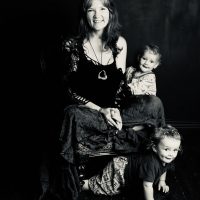

Read 2 comments and reply