0
 Share on bsky
“Should auld acquaintance be forgot…” ~ Robert Burns
~
In American culture, much of our identity is tied to our work.
What we are doing. What we have done.
I recently retired. Who am I now?
Should I simply forget and move on? Probably best to remember something. As a group, there could be lessons in things forgotten; they also can be an excuse for not moving forward. A fine line.
Years ago, my dad and I were in Myanmar on a boat to head up the monsoon-swollen Irrawaddy River from Bagan to Pakokku. We had to meet a bus in Pakokku to reach Mandalay. About 45 minutes in, our engine died. The captain shouted to the first mate and the two frantically worked to try to restart the engines.
In the meantime, we simply started drifting backwards downstream. My father stretched out on one of the seat benches in the sun and shut his eyes for the moment. I stood in the bow and watched the eroding banks and sandbars as we drifted by. After a brief, stern discussion with the captain, our guide, Bobo, joined me. The two of us simply watched the undulating river.
“It seems there is a problem with the fuel pump.” His white shirt was immaculate and pressed. His traditional green and black longyi was similarly pressed. “I will have to speak with the management in Pakokku.” The five of us slowly drifted back toward Bagan.
The relentless sun and thick humidity reminded me of home, in Florida. The flora of the area was also familiar. The similarities ended there. “Bobo, as I speak with people, I think I noticed names change with age and social conditions. I thought it was just a monk thing, but it seems like it is simply the way you do things here?”
“You’re correct. Our names change with age, actions, astrology, luck—many things.”
“That seems confusing.”
“It isn’t. It’s anatta.”
Anatta is a Buddhist concept pertaining to non-attachment. It didn’t occur to my American sensibility that a given name is a form of attachment. For some reason, I simply have always accepted my name as who I am. Labels, immutable names, are tied to conditions and related expectations. Our conditions change as we grow and live our lives.
I left my bureaucratic, civil service position in December of 2025, technically retired. Twenty-six years of service, working with non-profits, evaluating social systems, programs, and related granted contracts for children and families. There was joy in helping problem solve social issues and develop nonprofit businesses. I despised the ever-increasing bureaucracy and the pretend excuses for it. I had become a familiar name in our community. When I left, people said, “Congratulations!” I thanked them.
I’m sleeping better, drinking less, and have lost a little weight. I meditate in the morning. I try to write every day. I’ve found freedom from the obligations to others and a greater commitment to the obligations I have to myself.
Former coworkers ask what I do with my time. Unlike the boat on the Irrawaddy, I don’t believe I’m drifting. I’ve found adventure, purpose.
Recently, my father began to struggle with dementia. He still has a sense of others; things just don’t come to him quickly. He forgets the words. His life labels include professor, English scholar, teacher, author, and education innovator. He remains a caring and compassionate man. In a way, he’s more in the moment than ever most of the time as he loses the stories of what he has done and where he has been.
The trip was his idea. I find it hard to let go of the moments we’ve had and what I remember as him and love. It’s my memories with him that have gone with this new circumstance. He’s still here. It’s a change. I’ve had friends and family die; this is a harder change than adjusting to death—it’s more complicated.
Still, with the help of a friend, he has managed to finish a book he started writing a few years ago. He’s excited and hopes it becomes a best seller. That dream of his has been consistent since I was a child watching him finish graduate school.
There was no walk-on music when I started as a temp 26 years ago, and no walk-off music when I left as an established staffer, a professional, 26 years later. I didn’t know I was going to stay as long as I did. Like then, I didn’t have a vision or a dream for this moment.
I never knew I would retire. Of course, I didn’t want to die there either.
Before I left the office on my last day, I glanced at an old staff meeting note from 2004. Number one on the agenda read: “Don’t eat other people’s food from the staff refrigerator.” I like to think we did more, but I’m not sure. I think resolution came when the offending party left the job. Outside of the staff meeting, we didn’t speak about it.
Each day now, before the sun rises, I hear the roosters call. I live in a historic part of town. Neighbors trundle around their apartments, and cars roll by, just like any morning. My old office is down the street. Presently however, I feel no pressure, no emotional weight. No rush to get ready. No annoyance knowing I was going to walk into perpetual, cyclical conversations, always unfinished and repeated for years.
In retrospect, perhaps I too should have been biting other people’s sandwiches. I didn’t know I was staying. Eating other people’s food is a low mark on one’s permanent record.
But there’s no permanent record. Anything that begins has an ending. What’d I learn? Twenty-six years later, I learned not to be attached, to not be deluded into thinking what I am doing is me. As a Westerner, an American, that’s actually a tough lesson. I did some things—some helpful and effective, and some not.
While there, I pushed for family support and community development initiatives, now taken for granted as if it was always done. It wasn’t. Now it is. I know I did that. Good to have been a part.
Out of curiosity, I looked up what my name would have been in Burmese (the primary language in Myanmar): လှဝင်းရည်—Hla Win Yay. I like it. It conceptually translates to “a gentle but luminous man, creative, humane, and quietly respected.” I’m not sure how I would have interacted with the world having a name like that, but I hope not a lot different than I have. Kind of a hard name to live up to in our culture.
Now that I am retired, the name changes to ဦးရည်လင်း—U Yay Lin, marking a status shift. The new meaning is “one who has laid down official power and now offers clarity, creativity, and compassion.”
There’s no up or down stream on this river’s journey. The label is “retired,” but the experience simply doesn’t fit. None of my old labels are encapsulating my current situation. New year, new life adventure.
When we eventually drifted back to the port in Bagan, we got a new boat.
~
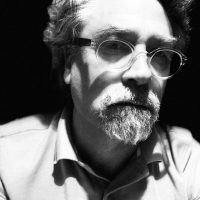
author: Glenn Brown
Image: Author's own
Editor: Nicole Cameron

Read 1 comment and reply