0
 Share on bsky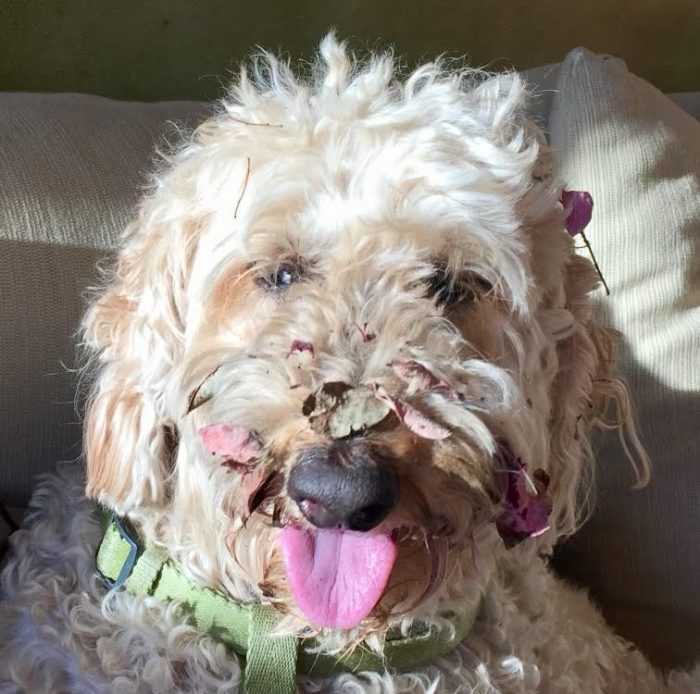
Let me guess: You’ve read the books. You’ve gone to therapy. You’ve had those “aha” moments where everything finally made sense—and then, a week later, you found yourself back in the same old spiral.
You’re not alone.
In my work as a psychologist, I’ve heard this from so many people—hoping for that one big breakthrough that will finally bring peace, clarity, or control. And honestly, I’ve felt that way too. But over time, I’ve learned something else:
Healing doesn’t come from one big moment.
It comes from what you do when your alarm goes off and you don’t want to face the day.
It comes from how you treat yourself when no one’s watching.
It comes from what you choose at 8 a.m.—before the day gets away from you.
Not dramatic. Not Instagram-worthy. But that’s where real change begins.
Not long ago, I had to say goodbye to my dog, Lucy. She’d been with me for sixteen years—through motherhood, career changes, loss, and love. She was my first baby.
When she died, I didn’t recognize the sounds that came out of me. Grief took over my whole body. Her absence was immediate, physical. It gutted me more than I expected.
The next morning, I got up and moved through my usual routine. I poured my coffee and repeated the phrase I’d been practicing for months as part of a savoring ritual I teach: “I am in charge of my mood.”
But that day, the words didn’t make me feel better. They didn’t pull me away from the pain. Instead, they pointed me toward what I needed—to stay with it.
I stood there, holding the warm mug, eyes swollen, chest tight. I thought of Lucy—the weight of her curled beside me, the softness of her fur, her wagging tail, those deep, soulful brown eyes.

I didn’t want to feel better.
I wanted to feel this. Because it honored her. And it felt true.
That’s what savoring really is. It’s not about chasing feel-good moments or forcing a silver lining. It’s about being present with what’s real—whether that’s joy, grief, or everything in between. And ritual is what gives that presence shape. It creates a container for the moment—so we don’t rush past what matters most.
Sometimes, what matters most is letting yourself feel.
I’ve spent much of my career working in rehab centers, mental health clinics, and even a maximum-security prison. I’ve sat with people in the middle of addiction, burnout, depression, and loss. And one thing I’ve learned is this:
Healing isn’t about willpower or waiting for some magical moment when you finally feel ready. It’s about building a rhythm that supports you—especially when life doesn’t.
I remember one man I worked with in prison who told me he made his bed every morning with military precision. “It reminds me that I’m still in charge of something,” he said. Another would pause and take four deep breaths before responding to conflict, even in the high-stress, chaotic environment around him.
These weren’t big gestures. They were rituals—tiny actions rooted in intention. And they gave these men a sense of control, dignity, and emotional steadiness in an environment where almost everything else was out of their hands.
So when I say healing is what you do at 8 a.m., I mean the actual, messy, ordinary moment when you’re tired, stressed, anxious, or just not in the mood.
That’s the moment that matters most.
Because that’s when you decide—consciously or not—how the rest of your day is going to unfold.
Do you reach for your phone—or take a breath first?
Do you skip breakfast—or sit down and savor something warm?
Do you rush into the day—or pause for 60 seconds to check-in with yourself?
These are micro-decisions. But they compound.
They tell your nervous system: “I’ve got me. I’m paying attention. I’m choosing how I want to show up.”
I’m not saying breakthroughs don’t happen. They do. Sometimes something clicks and your perspective shifts all at once.
But more often, real healing is quiet. It’s found in the moments no one else sees—when you choose presence over distraction, intention over autopilot. It can look like:
>> Saying no when it would be easier to say yes
>> Speaking to yourself with kindness instead of criticism
>> Drinking water before your third cup of coffee
>> Taking one full breath before opening your inbox
There’s no applause. No grand reveal. Just small, steady choices that bring you back to yourself—more connected, more grounded, and perhaps a little more whole.
And that’s where ritual comes in. When rituals are already in place—those tiny, intentional anchors in your day—they hold you when everything else feels uncertain. You don’t have to figure out how to cope from scratch. You just return to what you’ve already built. A breath. A phrase. A mug of coffee. A rhythm that reminds you: “I’m here. I know what to do next.”
Healing doesn’t have to be heroic. It just has to be practiced.
Especially at 8 a.m.
~

author: Robin Engelman
Image: Author's Own
Editor: Molly Murphy

This account does not have permission to comment on Elephant Journal.
Contact support with questions.