0
 Share on bsky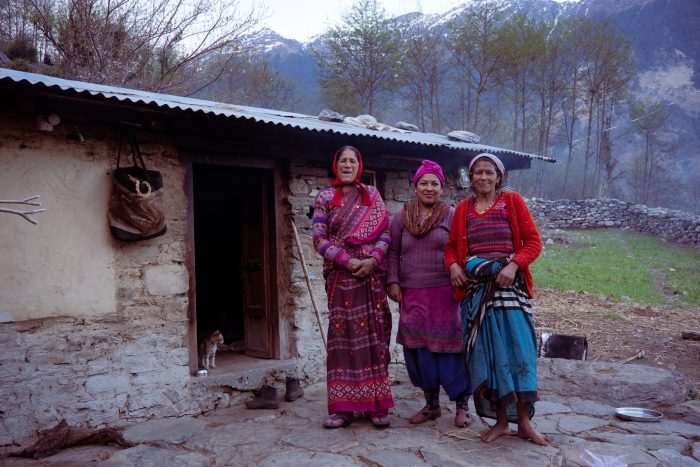
For the past two years, I’ve been living in a small village in the Indian Himalayas, at 2,300 meters above sea level.
Every day, I hike through these mountains—sometimes alone, sometimes as a trekking guide. But trekking here isn’t just about reaching the summit. It’s about the lessons learned along the way, especially from the people who call these mountains home.
One of the biggest lessons? How little we actually need!
When you’re on a multi-day trek, you quickly realize how much unnecessary stuff we carry—not just in our backpacks, but in our lives. Out here, you pack only the essentials: food, water, a warm jacket, and good shoes. And somehow, with so little, you feel freer and more alive than ever.
Nature doesn’t care about your outfit, your job title, or your achievements. It does not judge. In nature, we don’t measure our bodies by their appearance but by their strength to carry us over the next peak. It’s raw, real, and empowering.
For the Himalayan villagers, this simplicity isn’t just for the trails—it’s a way of life.
The people here don’t have overflowing closets or the latest shiny gadgets, yet they radiate happiness. Women walk miles in worn plastic sandals, carrying heavy loads of firewood, yet they greet you with warm smiles and calm resilience. Their lives revolve around the essentials: food, shelter, family, and community.
It’s a stark contrast to the world that most of us live in, where we’re constantly told we need more—more stuff, more achievements, more perfection. Capitalism is great at making us feel like we’re not enough so that we keep buying and chasing, only so that our economy can grow.
But the good news! Neither do we have to play that game, nor do we have to move to the mountains to escape it. It starts with small, conscious choices.
So, how can we actually simplify our lives?
Start with the Tangible
1. Declutter your space. Let go of things that don’t serve a real purpose or bring joy. Donate or give them away for free. A clean, simple space creates a sense of calm.
2. Make conscious purchases. Everything we own demands our time. We trade our time at work for money so that we can buy things, then we spend even more time maintaining, organizing, and cleaning these things. Before buying or subscribing, ask: is this something I truly need, or is it just another thing that takes away my time?
3. Cut out draining commitments. Say no to things that don’t align with what truly matters to you. For example, when I’m in Germany, I don’t go out with friends who consume alcohol. It can feel isolating at times, but I know it would drain my energy. Do more of what fuels you and less of what drains you—and be radical about it.
Clear the Mental Clutter.
One of the biggest challenges I face when returning to Germany is the overwhelming exposure to media. Whether it’s TV, Netflix, social media, dating apps, billboards, or digital ads, the constant flood of information and expectations feels inescapable. We’re bombarded with scary headlines, unrealistic role models, and messages telling us we need this or that product. This might sound pessimistic, but after spending time in a solitary place like the Himalayas, it becomes impossible to ignore that this is our reality. I believe we’ve normalized something that is quite unnatural.
All of this creates mental clutter—self-doubt, comparison, and a lingering sense of inadequacy. This mental clutter is even more exhausting than any physical clutter!
Finding clarity and self-acceptance in an information-saturated world isn’t easy, but it’s not impossible either:
1. Limit social media and news consumption. The less we expose ourselves to filtered success stories and fear-driven headlines, the more we can focus on our reality. Set time limits for social media, take digital detoxes, or have screen-free mornings and evenings. Be mindful of so-called “solutions”—like meditation apps. Do we really need another digital tool to be present? Isn’t it just another distraction? Instead, take a walk, journal, or sip a warm cup of tea in silence. Or as Jordan Peterson puts it: “That’s how you deal with the overwhelming complexity of the world: you ignore it, while you concentrate minutely on your private concerns.”
2. Practice Gratitude. Gratitude is a skill that can shift your perspective. Take a moment each day to list what you’re grateful for—your loved ones, a safe home, good food, a kind colleague, meaningful experiences. The more we recognize what we already have, the less we feel the need to chase more.
3. Spend Time in Nature. Science has shown that nature calms the nervous system. And it makes sense—we are nature. But city life often disconnects us from it. So, make it a priority: walk in the park, grow plants on your balcony, or swap a city vacation for a hiking trip. The more we return to nature, the more we return to ourselves.
The people in the Himalayan villages may not have much—at least, not by society’s definition of success. Their homes are simple, and their possessions are few. And yet, they laugh, they share, they wake up with purpose.
They have less stuff—but more life. And isn’t that what we’re all really searching for?
We don’t need to move to the mountains to embrace this mindset. We can start right where we are—by simplifying our lives and focusing on what truly matters.
Because in the end, happiness isn’t about how much we have, but how fully we appreciate what’s already there.
~

author: Johanna Dehning
Image: Author's Own
Editor: Lisa Erickson

This account does not have permission to comment on Elephant Journal.
Contact support with questions.