Monday, 22 June 2026

On this day of your life


I believe God wants you to know ...


... that life has nothing to do with what you are doing,

and everything to do with what you are being.


Be careful not to get caught in the "doingness" of your

life. That is not what you are here for. You are a sacred

soul, and you came here to the earth to Be something. 

And not just one thing, but many things.

The wonderful thing is, you get to choose what that is.

And you get to do that right now. Always Right Now.


So what do you choose to Be right now? Happy?

Content? Safe? Peace? Forgiving? Compassionate?

Love? Go ahead, choose. As many as you wish!

Reconnect With Your Inner Guidance (OM)


Nature image relating to the inspirational message

Put your human gifts back at the center of your life — and enhance the inner knowing and lived wisdom you hold within.

Many of us have a similar feeling right now — that somewhere along the way, we’ve begun outsourcing some of our most vital human gifts to the efficiency of technology. We’re driving somewhere unfamiliar, so we reach for GPS. We’re craving entertainment or inspiration, so we scroll through social media. We wonder whether to send the email, end the relationship, or publish our content, so we ask artificial intelligence.

And of course, technology can be incredibly useful. It can save time, organize our thoughts, offer perspective, and help us move through the day with more ease. This isn’t about eliminating technology from our lives. It’s about remembering that convenience was never meant to replace our innate intuition and wisdom of lived experience.

Perhaps the invitation is not to reject the extraordinary tools available to us now, but to put our human gifts back at the center of daily life. To pause before we search. To listen to our gut before we act. To make space for the inner voice that says yes, no, wait, or go. The more we practice returning to ourselves, the more we remember that discernment, creativity, instinct, and inner knowing are not outdated skills. They are sacred abilities of their own — always guiding us in the right direction.

Why I Stopped Explaining Myself to People who Choose Not to Hear.


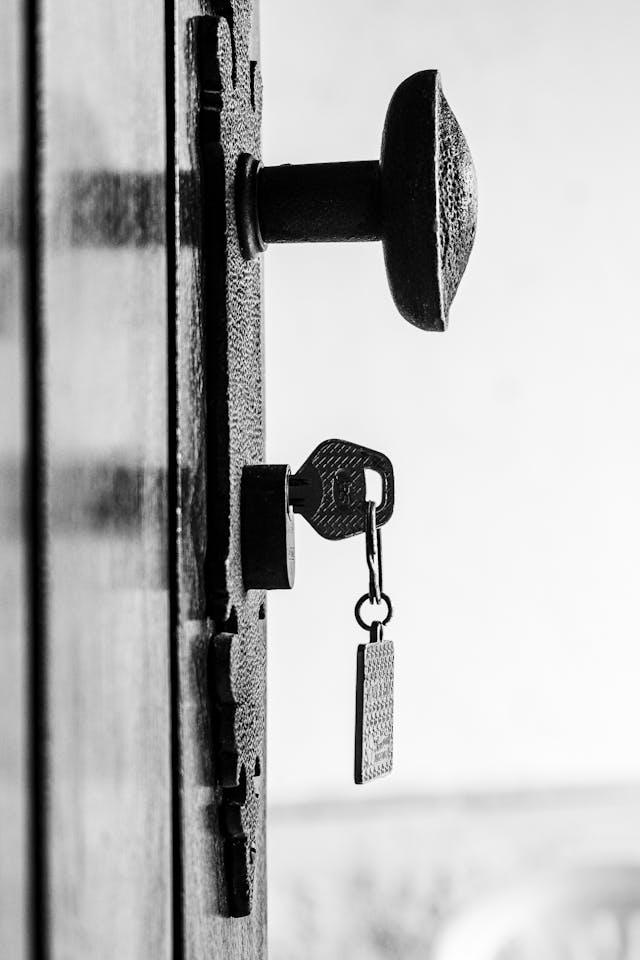
The Freedom of the Deadbolt

Most of us are raised to believe that if we keep talking, we can fix anything.

Explain yourself clearly enough, and the other person will finally understand. Find the right words and the wall comes down. Stay in the conversation long enough, and you will reach them.

That is the promise. And most of us spend years honoring it before we realize it was never a promise at all. It was a habit dressed up as hope.

We stay in this loop because of our own stubborn empathy. We project our capacity for self-reflection onto people who do not possess it. We assume that because we would feel remorse if someone explained how we were hurting them, they will feel it too.

But there is a particular kind of person—a friend who drains you steadily, a colleague who avoids the mirror, a relationship running on fumes and obligation—with whom talking stops being communication. It becomes fuel. Every explanation you offer is another log on a fire that was never meant to warm you.

I learned this in a kitchen in Memphis after an overnight hospital shift.

I was trying to explain—again—why a decision I had made was not reckless, but strategic. Why the property I bought was not a gamble but a calculated move for our family. I had explained this same logic a dozen times in a dozen different ways, each time believing that one more conversation would bridge the gap.

It did not.

It never had.

What I was actually doing was performing my own worthiness. I was auditioning for approval from someone who had already decided the verdict. Every explanation was a confession I did not owe, offered to a jury that was not deliberating.

That morning I stopped talking. Not out of anger. Out of clarity.

Silence, I discovered, is not the absence of communication. It is the purest form of it. When you stop handing someone a script, they are forced to write their own lines. And what they write—without your prompting, your justifying, your endless bridging—reveals everything you need to know.

Some people will reach for you in the quiet. They will say, “I miss your voice. I want to understand.” Those people deserve your words.

Others will fill the silence with accusations. They will say you are cold, punishing, withholding. They will frame your peace as an act of war. Those people do not miss your voice. They miss your compliance.

The difference between the two is the only information that matters.

As a nurse, I see this in clinical settings every day. A patient in crisis does not need a lecture on physiology. They need someone to stabilize the bleed first. You cannot reason with a nervous system in overdrive. You regulate the environment, reduce the stimulation, and wait for the body to come down before you attempt communication.

Relationships are no different. When someone is operating from a dysregulated state—whether from trauma, resentment, or the accumulated weight of unprocessed pain—your words do not land as intended. They land as threats, as provocations, as evidence for a case they are already building against you.

Silence in that context is not cruelty. It is triage.

I am not talking about the silent treatment—that weaponized withdrawal designed to punish. I am talking about the deliberate, conscious choice to stop explaining your worth to someone who has confused your patience for weakness. There is a canyon between the two. One is a cage. The other is a door.

The deadbolt is the hardest part. Not sliding it shut—that takes a single moment of clarity. The hard part is not sliding it back open the first time loneliness knocks.

Because loneliness will knock. It will knock dressed as nostalgia, as guilt, as the memory of someone on their best day. It will whisper that maybe you gave up too soon, that maybe one more conversation would have done it.

It would not have.

If a hundred conversations did not build the bridge, the hundred and first will not either. At some point, you are not building a bridge. You are just hauling lumber to a riverbank where no one is waiting on the other side.

The quietest thing in the room is usually the thing that cannot be argued with. Your results. Your peace. Your refusal to audition for people who will never clap.

Let them argue with the silence. It will hold up better than anything you ever said.

~


X

Read 1 comment and reply

Top Contributors Latest

Mario Brown  |  Contribution: 335

author: Mario Brown

Image: Alex Dos Santos/Pexels

Editor: Molly Murphy

Self-love is Antifascist.


View this post on Instagram


{Editor’s Note: “Stop covering politics,” some of our dear readers cry every time we post something relephant. Look: politics are life. Equal rights, empathy, fair economy, healthcare. We can’t ignore what’s happening, and you shouldn’t either. Disagree? We’re happy to share your experience here. ~ ed.}

People keep asking what to do in the face of rising fascism, as though the answer will arrive only as a public act, a platform, a confrontation, a vote, a protest, a policy, or a perfectly worded statement. All of those things may matter. Collective action matters. Political action matters. Material action matters.

Community defense matters.

We absolutely need each other in the world, not just in theory.

But before any of that can hold, there is a more intimate question: what kind of self has fascism been trained to rule?

Fascism does not only survive through force. It survives through obedience, exhaustion, fear, hierarchy, spectacle, shame, and the constant manufacturing of human insecurity. It requires people who are alienated from themselves. It works best on people who have been taught to distrust their own bodies, suppress their own instincts, seek permission from power, and measure their worth by compliance, productivity, desirability, and proximity to approval.

Capitalism helps build that kind of person every day.

It does this by teaching people to experience themselves as unfinished products. Not lives. Not souls. Not beings with inherent dignity. Products. Projects. Fixer-uppers. Problems to solve. Bodies to discipline. Identities to optimize. Selves to improve until they are marketable enough, thin enough, young enough, productive enough, pleasant enough, and profitable enough to be tolerated.

Self-loathing is not a side effect in that system. It is fuel.

If you hate yourself, you are easier to sell to. Easier to manage. Easier to rank. Easier to shame. Easier to divide. Easier to keep busy with your own renovation while the world burns around you. If you are locked in constant self-correction, you are less available for revolt. If you are always trying to become acceptable, you are less likely to ask whether the standard itself is violent.

That is why self-devotion matters politically.

I do not mean a shallow, branded, aesthetic version of self-love that stops at candles, skincare, and affirmation cards, though pleasure and beauty have their place. I mean something much more disruptive than that. I mean uncompromising and unapologetic self-devotion. I mean ending the internal arrangement in which your body is a burden, your needs are an inconvenience, your joy is frivolous, your desire is dangerous, and your worth is conditional.

I mean becoming unavailable for the worldview that says your value must be earned through suffering and performance.

Fascism needs people who are already practicing abandonment. It needs people trained to betray themselves on command. It needs people who have made peace with hierarchy inside their own bodies. It needs people who think domination is normal, punishment is virtue, and tenderness is weakness.

A person in real relationship with themselves is harder to recruit into that logic.

A person who trusts their own humanity is harder to flatten.

A person who has broken up with self-hatred is harder to control.

A person who no longer experiences themselves as a fixer-upper project is less likely to worship power for permission to exist.

This is not the whole work, but it is foundational work.

If you do not know what to do about fascism, start by refusing the daily rituals that train you for submission. Stop speaking to yourself like an occupying force. Stop treating your body like enemy territory. Stop making a religion out of self-correction. Stop calling it discipline when what you mean is self-contempt. Stop assuming that cruelty makes you strong. Stop assuming that joy makes you unserious.

Return to yourself.

Feed yourself like your life matters.

Rest like your exhaustion is not a moral failure.

Dress like your body belongs to you.

Speak like your voice is not waiting for institutional approval.

Make beauty that does not ask permission from the market.

Protect your attention from systems designed to keep you dysregulated, ashamed, and hungry for validation.

Become someone the machine finds harder to digest.

That kind of self-devotion does not make a person less political. It makes them less governable by fear. It makes them less available for manipulation. It makes them more capable of solidarity, because they are no longer building their identity out of scarcity, panic, or proximity to domination.

They can recognize other people’s humanity more clearly because they have stopped waging war against their own.

The first step is not the only step. No one is saying personal healing replaces structural analysis, mutual aid, organizing, or resistance. It does not. But if you want a sturdy foundation for any of that work, begin here: with a self that is not already colonized by shame.

Begin with fierce self-respect.

Begin with radical tenderness.

Begin with the refusal to be turned against yourself.

Begin with the decision that your life will not be organized around becoming acceptable to systems that were never designed to love you back.

Self-love is anti-fascist because it interrupts the training. It breaks the spell. It weakens the inner architecture that authoritarian systems depend on. It reminds you that your body is not a problem, your humanity is not a flaw, and your existence is not a thing that must be justified through obedience.

That is not everything.

It is, however, a beginning.

And in times like these, a real beginning matters.

~

X

Read 0 comments and reply

Top Contributors Latest

Lisa M. Hayes  |  Contribution: 4,510

author: Lisa M. Hayes

Image: @lauraklinke_art/Instagram

Editor: Molly Murphy