 Share on bsky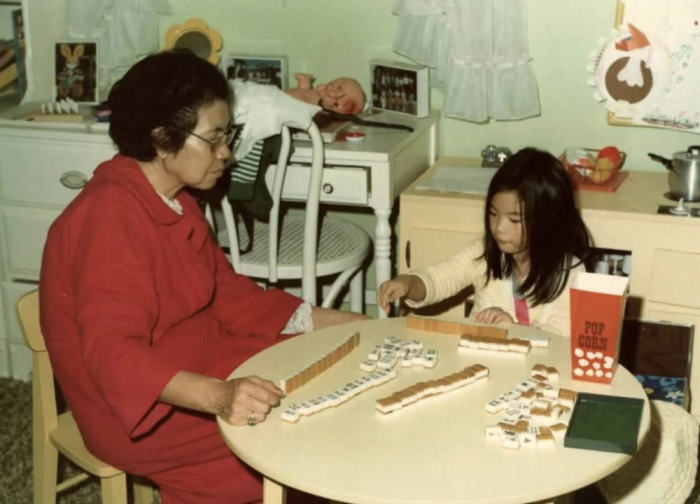
My grandmother moved in with us when I was four and a half years old.
My grandfather had just died of a massive stroke. She was newly widowed, and she came the way family comes when someone is suddenly alone—quietly and necessarily.
My mother was home in those early years because my sister had just been born and having my grandmother there made the walls of our family feel fuller. More held.
And as the years passed, my grandmother’s presence made it possible for my mother to return to work full-time. What began as a widow finding her footing after loss became the architecture of my entire childhood. She was simply always there.
She was the one who was there when I got home from school. She made my dinner every night. The one whose hands I knew before I knew almost anything else about the world.
I didn’t know all that she was carrying.
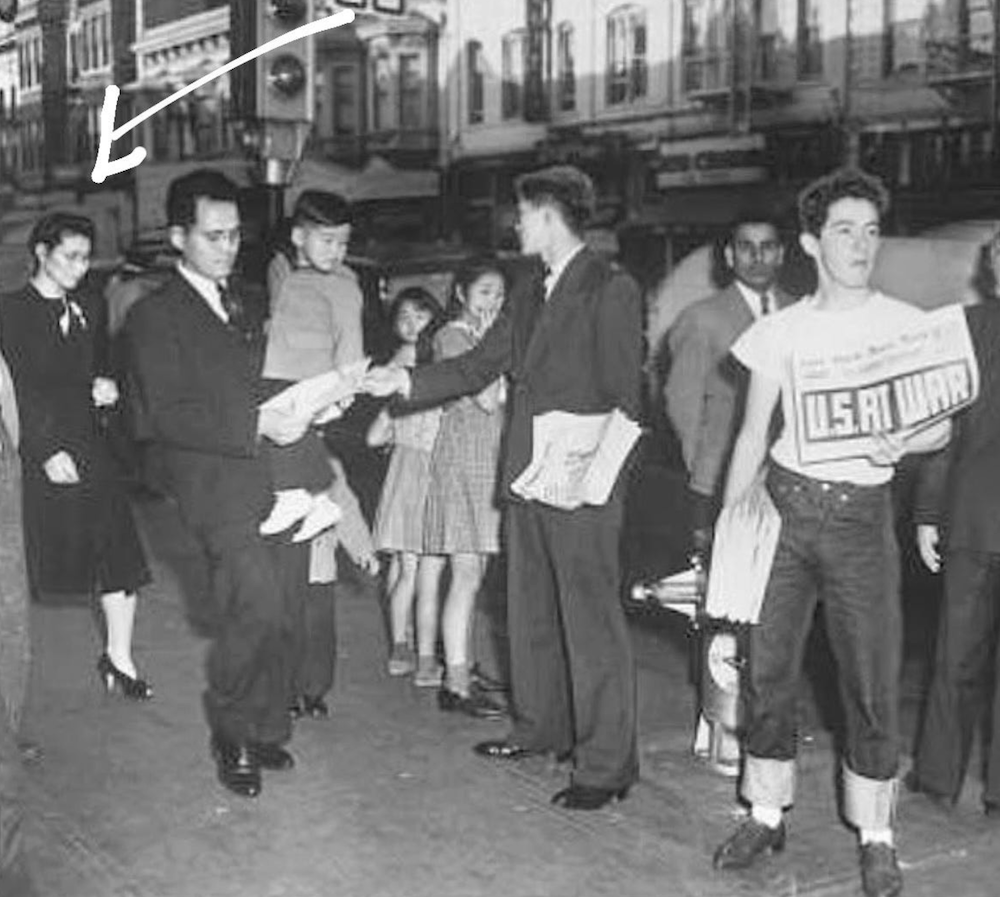
I didn’t know about the daughter she had buried—her firstborn, five years old, taken by scarlet fever—years before my mother was even born. I didn’t know about the dry cleaning business she and my grandfather had built here in the country she was born. And lost when Executive Order 9066 was issued at the start of World War II. I didn’t know about the cramped train ride to the Eastern Sierra Nevadas. The desert. The barbed wire fences. Manzanar. And later, Tule Lake, where they were relocated.
My grandparents’ photo is in the film at Manzanar’s historic museum today. Her beautiful face is part of the official record of that place and time.
History witnessed her even when she could not fully witness herself.
I didn’t know any of this when she was making her signature crunchy panko-breaded fish dinners and sitting with me to play Go Fish or teach me Mah-jong.
I just knew her hands. Her presence. Her smile.
What I also didn’t know—what I wouldn’t understand for decades—was why they ended up at Tule Lake specifically.
During the internment, every Japanese American family was required to answer a loyalty questionnaire. Two questions. And everything rode on the answers.
Would they serve in the U.S. armed forces?
Would they renounce all allegiance to Japan?
My grandparents still had family in Japan. Parents. Siblings. People they loved. They couldn’t renounce them. They refused to pretend their connections didn’t exist. And they were punished for it.
Transferred to Tule Lake, the most segregated and militarized of all 10 internment camps. Reserved for those deemed disloyal. Dangerous.
Insufficiently American.
They were sent there for having family and for refusing to let go.
~
My mother was conceived at Tule Lake, and born there in September 1945, just months before the camp closed. Her first breath was inside those walls. Her first sense of the world was a world defined by confinement behind barbed wire.
Conceived and born into confinement.
That is not a metaphor. That is my mother’s literal origin story—and by proxy and DNA, it is part of mine.
I know the details of Manzanar and Tule Lake because I asked.
In college, I took an Asian American Studies class and I interviewed my grandmother for one of my assignments. With pen and notebook, I sat across from her—this woman who helped raise me, whose hands I had known my whole life—and for the first time, she told me things.
The business they lost. The camps. The life that got taken and the life that got built inside that taking. And then she told me something I have never forgotten.
She said the guards at Tule Lake stood with their guns turned inward. Not outward. Not to protect the people inside from outside threat but to keep them from leaving. The barrels faced them.
And yet, my grandmother said she felt safest inside the camp.
I remember sitting with that for a long time. Twenty-year-old me trying to make sense of it. It felt backwards to me because it was backwards. But over 30 years later, I understand it completely.
Outside was the country that had taken everything: the business, the freedom, the dignity, and the future they had worked for in the place they were born. Outside was the country that had looked at their love for their own family in Japan and called it disloyalty. Outside was unpredictable. Hostile. Unsafe.
Inside the camp, at least the threat was visible. Known. Contained.
Her nervous system had made a calculation that only makes sense when you understand what survival actually costs: familiar confinement is safer than an uncertain world.
She felt safest where the guns pointed at her. That is what survival can do to a person. That is what it teaches the body. And the body remembers long after the danger has passed.
What the body knows, it carries forward—quietly, without intention, without words.
~
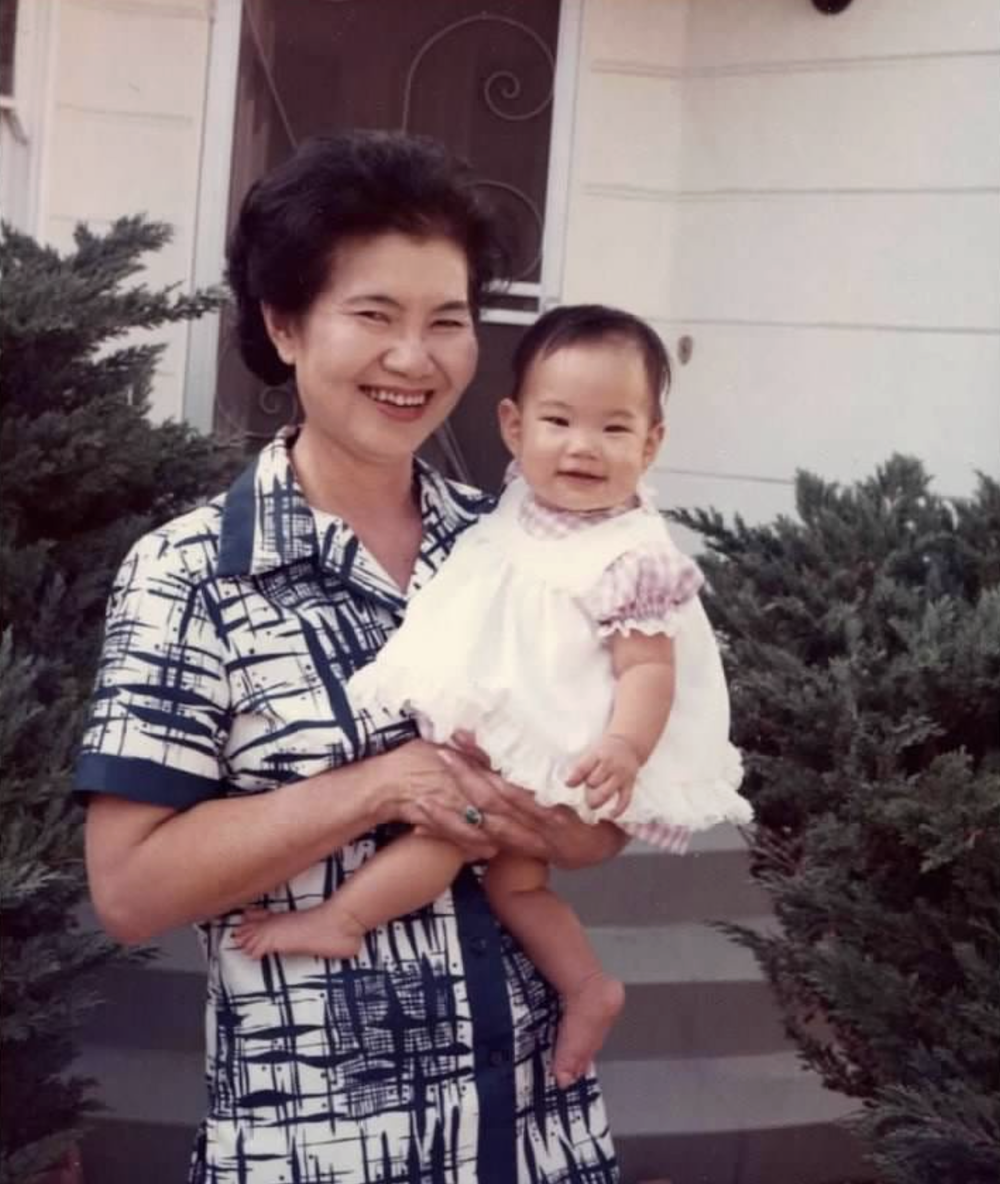
My grandmother was not a simple woman. Let me be clear about that.
She was sassy. Vain. Judgmental. She could play victim and martyr in one fell swoop. I remember her being critical of my mother. Critical of her weight. My grandmother was hypervigilant about her own body: osteoporosis, aches, pains, a constant narration of physical suffering that my mother didn’t always know how to hold.
She complained. She had opinions. She took up space with her personality, even as she made herself invisible in other ways.
She was fully, frustratingly, and beautifully human.
And she was the one person whose love I never once questioned. Not for a single day of my childhood. Both of those things were true at the same time.
The woman who survived by shrinking was also the most present love I have ever known.
She gave me so much. Nourishment. Play. Unquestioned love. She also gave me, without knowing or intending it, a nervous system braced for loss. Both things traveled with her. The love and the fear, inseparable—because they always were.
And still…the family punished for refusing to sever their connections raised a granddaughter who spent a lifetime craving genuine connection and yet was afraid to hold on too tight. Too visible. Too much.
I have spent a lot of time sitting with that paradox. I am still sitting with it.
~

author: Lisa Kumagai
Image: Author's own
Editor: Nicole Cameron

Read 0 comments and reply