10
 Share on bsky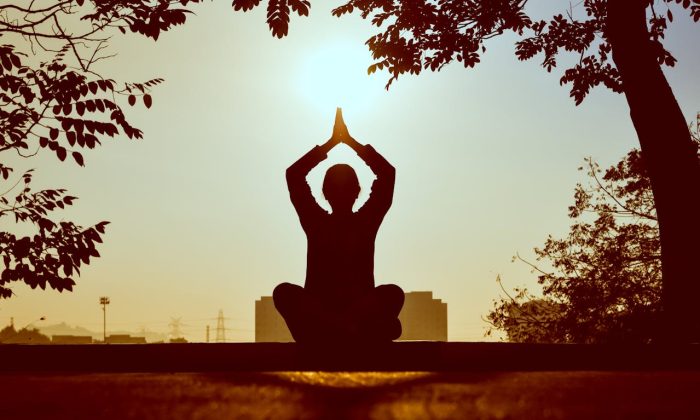
In my seventh treatment program, after I relapsed yet again, I started looking forward to yoga as the only time of the week when my body didn’t ache for a drink.
The hours after class were quiet—no cravings, no panic, no racing thoughts. Just breath. Just space. I didn’t know it then, but those small pockets of peace were the beginning of my recovery.
In yoga, teachers often instruct students to “root to rise.” It’s a simple cue telling us to ground down through the feet or hands before lifting upward into a pose—to find stability before expansion. Over time, I realized those words carried a much deeper truth: we can’t rise until we feel safe where we stand. That became my lesson both on and off the mat.
By the time I finally stayed sober for more than a couple months at a time, I had spent the majority of two years in and out of treatment programs. I’d lost my job because I was too sick to show up. I was about to lose my home. But the deepest heartbreak came in a letter from the court: I had lost custody of my eight-year-old daughter. I can still feel the weight of that envelope in my hand—the moment everything in me broke open. I knew I couldn’t keep living the way I had been; I wanted to stay sober, but I didn’t know how.
I threw myself into every recovery program I could find, hoping their structure would save me. But what I found was that the more I tried to think my way into recovery, the more disconnected I felt from my own body. Meetings helped to an extent, but I still woke up with a knot in my stomach and a mind that wouldn’t stop spinning. I began to realize that my addiction wasn’t just in my thoughts—it lived in my tissues, my breath, and especially my nervous system.
When I stepped onto my mat, something shifted. The postures weren’t just stretches; they were invitations to feel. To stay. To breathe through discomfort instead of running from it. Yin yoga, in particular, became my respite. The stillness of those long holds gave me space to listen to the parts of myself I had numbed for years. Each exhale loosened a little bit of fear. Each pose whispered, You are safe now.
Breathwork, I discovered, is the heartbeat of yoga—the bridge between body and mind. It’s how energy moves, how the nervous system learns safety, and how presence takes root. The more I practiced conscious breathing, the more I began to feel the shift from barely surviving to actually living.
The science behind that feeling is something I would later learn: yoga and somatic practices stimulate the vagus nerve, the main communicator between body and brain that governs our stress response. When activated through breath, slow movement, and mindfulness, the vagus nerve helps shift us out of fight-or-flight and into rest and repair. Our heart rate slows, cortisol drops, and the body begins to trust safety again. It’s a physiological form of medicine, an antidote to addiction.
Over time, I stopped counting how many days I’d stayed sober and started measuring recovery by how grounded I felt. If I felt grounded, I wasn’t drinking. I began to crave the feeling of calm after yoga more than I ever craved alcohol. Breathwork became my new ritual, my reset button. I discovered that a single round of conscious breathing could change my state of being just as fast as any substance I’d ever taken. It hit different, but in the best possible way.
When I first heard the popular saying “the body keeps the score” coined by Bessel van der Kolk (a leader in PTSD research), I thought of how much pain my body had carried throughout my addiction. The weight of this was overwhelming. In my experience, though, I’ve come to believe the opposite is also true: the body keeps the healing. Every time we breathe deeply, stretch gently, or sit still long enough to listen, we plant new roots of safety. Those roots grow quietly, anchoring us to the present moment, reminding us that recovery isn’t about escaping our past—it’s about inhabiting our body again.
Yoga taught me that healing doesn’t happen by climbing out of the darkness, but by learning to root down in it—to feel the ground beneath you and realize you are still here. Still breathing. Still capable of growth. Like a tree, recovery begins below the surface, in the soil of our own surrender.
Today, I guide others in recovery through an approach I created called R.I.S.E. (Restorative Integrated Somatic Exercises)—a daily practice that grew out of my own healing journey. Each sequence combines breath, gentle yoga postures, and somatic movement designed to reestablish safety in the body and nurture recovery that lasts.
Whenever you feel triggered—whether you’re navigating recovery or mental health challenges—try 10 rounds of Anuloma Pranayama. For each round of this breathing exercise, inhale through the nose for a slow count of four, hold your breath for four, and exhale slowly for eight. Let your outbreath lengthen and soften, grounding you back into safety. With every long exhale, imagine roots extending downward—steady, calm, and unshakable.
Through steady practice, the roots of breathwork will weave a foundation of safety, and breath by breath, the rubble of rock bottom will turn to fertile ground—a place where the body grows in recovery and learns to rise again.
~


Read 1 comment and reply