0
 Share on bsky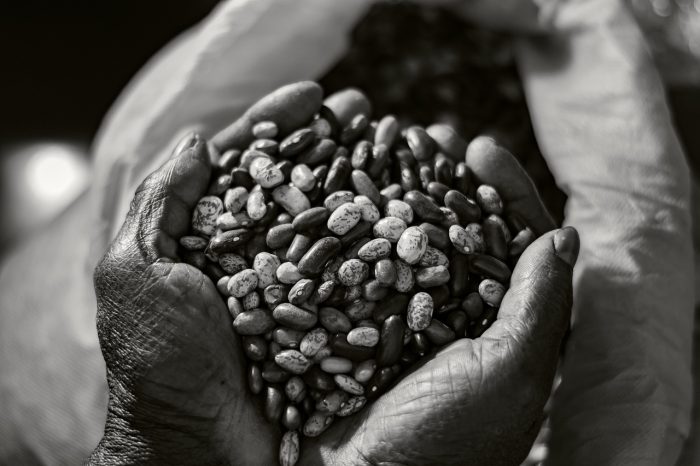
I have a ghost-ache in my palms.
It’s a memory that surfaces whenever I smell beans soaking—a faint, dull throb that takes me back to my childhood kitchen in Nigeria.
Back then, the promise of Sunday lunch, with its glorious, steaming plates of moimoi (a savory, steamed bean pudding) was always preceded by a Saturday of dutiful suffering.
The ritual was peeling the beans.
For hours, I would sit hunched over a large bowl, rubbing handfuls of soaked beans between my palms. Rub, rinse, repeat. The goal was to remove the thin, fibrous skin from every single bean, a task that felt both endless and essential. It was a rite of passage, a lesson in endurance passed down from my mother, who learned it from hers. It was, I believed, the only way to achieve the silken texture our cherished family recipes demanded.
It was also a form of torture I secretly dreaded. It was messy, exhausting, and by the end, my hands would be raw and stained. I associated this essential part of my culture with pain.
For years, I carried this belief into my own adulthood: that to honor tradition, one must endure the struggle. That authenticity required a kind of penance.
And then, one day, exhausted and staring at a mountain of beans, a question bloomed in my mind, quiet and revolutionary: Why does this have to be so hard?
Hiding in plain sight on my counter was my blender, an appliance I used for smoothies and tomato sauces. On a whim, I wondered…what if?
That whim didn’t just save my hands. It rewired my understanding of tradition, effort, and joy.
The Ritual, Reimagined.
I discovered that the blender, when used with intention, could do the work of hours in mere moments. It wasn’t about pulverizing the beans into submission, but about using a modern tool with gentle persuasion.
The new ritual became a form of meditation, not drudgery.
First, the soak. A short bath in cold water, just enough to soften the skins. It was a lesson in patience but not penance. A crucial 30 minutes, where I learned that waiting too long—over-soaking the beans—would turn them to mush, a reminder that even in preparation, timing and letting go are key.
Then, the pulse. I’d spoon the soaked beans into the blender with fresh, cool water, but instead of hitting “liquify,” I’d use the pulse button. A brief, percussive whir—once, twice, three, four times. Not a violent grinding, but a gentle, insistent dance that coaxed the skins from the beans. It was a lesson in using power with grace.
Finally, the release. I’d pour the cloudy mixture into a large bowl. The light, papery skins would float to the surface, separating themselves almost magically. As I poured off the water, the skins would wash away, leaving behind the pure, ivory-colored beans. This act of separation felt deeply satisfying, almost therapeutic. I wasn’t just washing beans; I was washing away the unnecessary. The struggle. The pain.
What was left was the essence of the tradition—the beautiful, naked bean, ready to be transformed into the food that tasted of home. The moimoi was just as silky. The akara (crispy, golden bean fritters) were just as fluffy. The flavor was the same. The love was the same.
The only thing missing was my suffering. And it turned out, the dish was never better for it.
The Lesson We Can All Take from a Bowl of Beans.
This simple kitchen hack became a profound life lesson. It taught me to question the “shoulds” we inherit. It taught me to differentiate between the spirit of a tradition and the suffering we sometimes attach to it.
The spirit of my family’s tradition was the final dish—the nourishment, the community, the love baked into every bite. The suffering was the belief that my aching hands were a necessary ingredient in that love.
They weren’t.
It makes me wonder: where else in our lives are we rubbing our hands raw for a tradition that no longer serves us? What struggles do we cling to out of a misplaced sense of duty, believing our pain makes the outcome more valid?
Whether it’s in our work, our relationships, or our spiritual practices, maybe it’s time to look for the blender. Maybe it’s time to find the tool, the mindset, the simple, compassionate shift that honors the essence of what we’re doing while releasing the need for it to be so damn hard.
You can honor the past without being a prisoner to its pain. Sometimes, the most mindful act is to simply let it be easy.
~


Read 1 comment and reply